Showing posts with label social justice. Show all posts

Ten Great Quotes from Pope Francis

0 comments
Pope Francis is a gifted orator, and an effective evangelist, proclaiming the Gospel from the world’s largest pulpit. In the short time that he’s been pope, he’s had a lot to say. Today, I want to highly ten quotations from Pope Francis that you might have missed. These are taken from ten different occasions, on a wide range of subjects related to the faith:

On the importance of Easter:
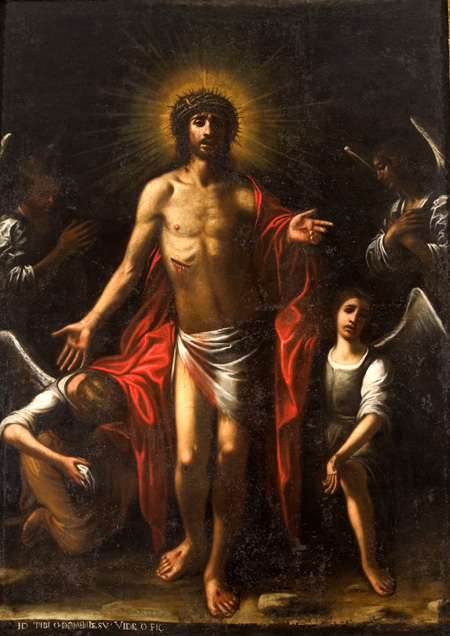
Workshop of Mario Minniti, The Five Signs (16th c.)
What was a simple act, done surely out of love – going to the tomb – has now turned into an event, a truly life-changing event. Nothing remains as it was before, not only in the lives of those women, but also in our own lives and in the history of mankind. Jesus is not dead, he has risen, he is alive! He does not simply return to life; rather, he is life itself, because he is the Son of God, the living God (cf. Num 14:21-28; Deut 5:26; Josh 3:10). Jesus no longer belongs to the past, but lives in the present and is projected towards the future; Jesus is the everlasting “today” of God. This is how the newness of God appears to the women, the disciples and all of us: as victory over sin, evil and death, over everything that crushes life and makes it seem less human. 
And this is a message meant for me and for you dear sister, for you dear brother. How often does Love have to tell us: Why do you look for the living among the dead? Our daily problems and worries can wrap us up in ourselves, in sadness and bitterness... and that is where death is. That is not the place to look for the One who is alive! Let the risen Jesus enter your life, welcome him as a friend, with trust: he is life! If up till now you have kept him at a distance, step forward. He will receive you with open arms. If you have been indifferent, take a risk: you won’t be disappointed. If following him seems difficult, don’t be afraid, trust him, be confident that he is close to you, he is with you and he will give you the peace you are looking for and the strength to live as he would have you do. (Homily, Easter Vigil, March 30, 2013)
 On the need for small (and large) proclamations of the faith:
To be sure, the testimony of faith comes in very many forms, just as in a great fresco, there is a variety of colours and shades; yet they are all important, even those which do not stand out. In God’s great plan, every detail is important, even yours, even my humble little witness, even the hidden witness of those who live their faith with simplicity in everyday family relationships, work relationships, friendships. There are the saints of every day, the “hidden” saints, a sort of “middle class of holiness”, as a French author said, that “middle class of holiness” to which we can all belong. But in different parts of the world, there are also those who suffer, like Peter and the Apostles, on account of the Gospel; there are those who give their lives in order to remain faithful to Christ by means of a witness marked by the shedding of their blood. Let us all remember this: one cannot proclaim the Gospel of Jesus without the tangible witness of one’s life. (Homily, April 14, 2013)
On the true goal of economics and politics: 
[C]oncern for the fundamental material and spiritual welfare of every human person is the starting-point for every political and economic solution and the ultimate measure of its effectiveness and its ethical validity.

Moreover, the goal of economics and politics is to serve humanity, beginning with the poorest and most vulnerable wherever they may be, even in their mothers' wombs. Every economic and political theory or action must set about providing each inhabitant of the planet with the minimum wherewithal to live in dignity and freedom, with the possibility of supporting a family, educating children, praising God and developing one's own human potential. This is the main thing; in the absence of such a vision, all economic activity is meaningless.

In this sense, the various grave economic and political challenges facing today's world require a courageous change of attitude that will restore to the end (the human person) and to the means (economics and politics) their proper place. Money and other political and economic means must serve, not rule, bearing in mind that, in a seemingly paradoxical way, free and disinterested solidarity is the key to the smooth functioning of the global economy.” (Letter to H.E. Mr David Cameron, British Prime Minister, on the occasion of the G8 Meeting, June 15, 2013).
On war and peace:
This morning I celebrated Holy Mass with several soldiers and with the parents of some of those who died in the missions for peace, who seek to further reconciliation and peace in countries in which so much fraternal blood is spilled in wars that are always madness. ‘Everything is lost in war. Everything is gained with peace’. I ask for a prayer for the fallen, for the injured and for their relatives.” (Post-Angelus comments, June 2, 2013)
On the Parable of the Prodigal Son:
I am always struck when I reread the parable of the merciful Father; it impresses me because it always gives me great hope. Think of that younger son who was in the Father’s house, who was loved; and yet he wants his part of the inheritance; he goes off, spends everything, hits rock bottom, where he could not be more distant from the Father, yet when he is at his lowest, he misses the warmth of the Father’s house and he goes back. And the Father? Had he forgotten the son? No, never. He is there, he sees the son from afar, he was waiting for him every hour of every day, the son was always in his father’s heart, even though he had left him, even though he had squandered his whole inheritance, his freedom. The Father, with patience, love, hope and mercy, had never for a second stopped thinking about him, and as soon as he sees him still far off, he runs out to meet him and embraces him with tenderness, the tenderness of God, without a word of reproach: he has returned! And that is the joy of the Father. (Homily, Papal Mass for the Possession of the Chair of the Bishop of Rome, Divine Mercy Sunday, April 7, 2013)
On the role of women in proclaiming the Gospel:
Friedrich Overbeck, Easter Morning (1818)
But how was the truth of faith in Christ’s Resurrection passed down to us? There are two kinds of testimony in the New Testament: some are in the form of a profession of faith, that is, of concise formulas that indicate the centre of faith; while others are in the form of an account of the event of the Resurrection and of the facts connected with it. [....]

Another point: in the profession of faith in the New Testament only men are recorded as witnesses of the Resurrection, the Apostles, but not the women. This is because, according to the Judaic Law of that time, women and children could not bear a trustworthy, credible witness. Instead in the Gospels women play a fundamental lead role. Here we can grasp an element in favour of the historicity of the Resurrection: if it was an invented event, in the context of that time it would not have been linked with the evidence of women. Instead the Evangelists simply recounted what happened: women were the first witnesses. This implies that God does not choose in accordance with human criteria: the first witnesses of the birth of Jesus were shepherds, simple, humble people; the first witnesses of the Resurrection were women. And this is beautiful. This is part of the mission of women; of mothers, of women! Witnessing to their children, to their grandchildren, that Jesus is alive, is living, is risen. Mothers and women, carry on witnessing to this! It is the heart that counts for God, how open to him we are, whether we are like trusting children.

However this also makes us think about how women, in the Church and on the journey of faith, had and still have today a special role in opening the doors to the Lord, in following him and in communicating his Face, for the gaze of faith is always in need of the simple and profound gaze of love.

The Apostles and disciples find it harder to believe. The women, not so. Peter runs to the tomb but stops at the empty tomb; Thomas has to touch the wounds on Jesus’ body with his hands. On our way of faith it is also important to know and to feel that God loves us and not to be afraid to love him. Faith is professed with the lips and with the heart, with words and with love.
(General Audience, April 3, 2013)
On good and bad pastors: 
‘Do you love me?’; ‘Are you my friend?’

The One who scrutinizes hearts (cf. Rom 8:27), makes himself a beggar of love and questions us on the one truly essential issue, a premiss and condition for feeding his sheep, his lambs, his Church. May every ministry be based on this intimacy with the Lord; living from him is the measure of our ecclesial service which is expressed in the readiness to obey, to humble ourselves, as we heard in the Letter to the Philippians, and for the total gift of self (cf. 2:6-11).

Moreover, the consequence of loving the Lord is giving everything — truly everything, even our life — for him. This is what must distinguish our pastoral ministry; it is the litmus test that tells us how deeply we have embraced the gift received in responding to Jesus’ call, and how closely bound we are to the individuals and communities that have been entrusted to our care. We are not the expression of a structure or of an organizational need: even with the service of our authority we are called to be a sign of the presence and action of the Risen Lord; thus to build up the community in brotherly love.
Not that this should be taken for granted: even the greatest love, in fact, when it is not constantly nourished, weakens and fades away. [....] A lack of vigilance — as we know — makes the Pastor tepid; it makes him absentminded, forgetful and even impatient. It tantalizes him with the prospect of a career, the enticement of money and with compromises with a mundane spirit; it makes him lazy, turning him into an official, a state functionary concerned with himself, with organization and structures, rather than with the true good of the People of God. Then one runs the risk of denying the Lord as did the Apostle Peter, even if he formally presents him and speaks in his name; one obscures the holiness of the hierarchical Mother Church making her less fruitful. 
(Profession of Faith with the Bishops of the Italian Episcopal Conference, May 23, 2013).
On the quest for holiness: 
Carl Heinrich Bloch, Woman at the Well (19th c.)

Draw always from Christ, the inexhaustible wellspring; strengthen your faith by attending to your spiritual formation, to personal and communitarian prayer, and to the liturgy. [...] Advance with determination along the path of holiness; do not rest content with a mediocre Christian life, but let your affiliation serve as a stimulus, above all for you yourselves, to an ever greater love of Jesus Christ. (Homily, Holy Mass on the Occasion of the Day of Confraternities and of Popular Piety, May 5, 2013)
On staying close to Christ in times of trouble:
Remain steadfast in the journey of faith, with firm hope in the Lord. This is the secret of our journey! He gives us the courage to swim against the tide. Pay attention, my young friends: to go against the current; this is good for the heart, but we need courage to swim against the tide. Jesus gives us this courage! There are no difficulties, trials or misunderstandings to fear, provided we remain united to God as branches to the vine, provided we do not lose our friendship with him, provided we make ever more room for him in our lives. This is especially so whenever we feel poor, weak and sinful, because God grants strength to our weakness, riches to our poverty, conversion and forgiveness to our sinfulness. The Lord is so rich in mercy: every time, if we go to him, he forgives us. Let us trust in God’s work! With him we can do great things; he will give us the joy of being his disciples, his witnesses. Commit yourselves to great ideals, to the most important things. We Christians were not chosen by the Lord for little things; push onwards toward the highest principles. Stake your lives on noble ideals, my dear young people! (Homily, Holy Mass and Conferral of the Sacrament of Confirmation, April 28, 2013)
 On the institution of the priesthood:
It is true that God has made his entire holy people a royal priesthood in Christ. Nevertheless, our great Priest himself, Jesus Christ, chose certain disciples to carry out publicly in his name, and on behalf of mankind, a priestly office in the Church. For Christ was sent by the Father and he in turn sent the Apostles into the world, so that through them and their successors, the Bishops, he might continue to exercise his office of Teacher, Priest, and Shepherd. Indeed, priests are established co-workers of the Order of Bishops, with whom they are joined in the priestly office and with whom they are called to the service of the people of God. (Homily, Holy Mass on the Occasion of Priestly Ordinations in the Vatican Basilica, April 21, 2013)
Obviously, these ten passages are just scratching the surface. If you want more, feel free to check out his homilies, Angelus and Regina Caeli talks, papal audiences, and letters.

Speaking Out Against the Slave Labor of the Sweatshop System

0 comments
The Rana Plaza building near Dhaka, Bangladesh collapsed recently, killing (at latest count) 657 sweatshop workers, and seriously injuring thousands. Pope Francis responded in a homily, condemning the horrible wages and conditions:
Not paying a just [wage], not providing work, focusing exclusively on the balance books, on financial statements, only looking at making personal profit. That goes against God! [....] A headline that impressed me so much the day of the Bangladesh tragedy, 'Living on 38 euros a month': this was the payment of these people who have died ... And this is called 'slave labor!'
The collapsed Rana Plaza building
Worse than the hours or conditions is the mindset that gave rise to these sweatshop conditions, a mentality that places profits above human lives. That dehumanizing disregard for the value of human life was particularly visible in this disaster, as management ordered workers to risk their lives, even after it became clear that the building was a serious safety hazard:
Several garment workers near the wreckage said a crack appeared Tuesday on the building's seventh floor. 
At first, the workers said, managers ordered workers not to report to work on Wednesday.
Later, the factory owners reversed the order, telling workers that the building was safe, said Marjina Begum, who worked on the sixth floor. Many workers were hesitant to show up Wednesday but reported to work because they were afraid of losing their jobs, she said. More than a dozen other workers corroborated her story.
It’s this dehumanization that Pope Francis drew particular attention to, noting that in the modern economic system,
People are less important than the things that give profit to those who have political, social, economic power. What point have we come to? To the point that we are not aware of this dignity of the person; this dignity of labor. But today the figure of St. Joseph, of Jesus, of God who work - this is our model - they teach us the way forward, towards dignity. 
Both communism and many forms of capitalism share a reductionist view of man. Instead of treating every human as made in the image and likeness of God, man is viewed simply as “labor” or the “proletariat.” His worth is no longer tied to his innate and God-given human dignity, but to his economic capacity, and he becomes little more than a glorified machine (and in some cases, lower than even machines, since damaged “labor” is easily replaced).

Victims of the Rana Plaza collapse
This point, made well in Josef Pieper’s Leisure: The Basis of Culture, has been aggravated by another trend. Over the last few decades, there has been in a shift in how we (particularly, but not exclusively, Americans) view economic issues. In the past, the two sides of the political spectrum were focused largely on the rights and interests of business owners and “job creators” on one side, and the rights and interests of workers on the other.

These days, I’d argue that there’s been a clear shift: both sides of the political aisle are moving away from workers’ rights, and the legitimate rights of businesses (and business owners), in favor of “consumers’ rights.” We see this shift in a variety of contexts. For example, many of the arguments against conscience clauses and for the HHS Mandate both appear to be based on some variation of this idea: “I’m the customer and I want this, so I should be able to have it, even if you are morally opposed to giving it to me.”

That same unprincipled selfishness seems to be at the root of the problem here, as Western (American and British) clothing companies fueled the demand for this sweatshop:
Among the garment makers in the building were Phantom Apparels, Phantom Tac, Ether Tex, New Wave Style and New Wave Bottoms. Altogether, they produced several million shirts, pants and other garments a year.

The New Wave companies, according to their website, make clothing for major brands including North American retailers The Children's Place and Dress Barn, Britain's Primark, Spain's Mango and Italy's Benetton. Ether Tex said Wal-Mart, the world's biggest retailer, was one of its customers.  
Wal-Mart said none of its clothing had been authorized to be made in the facility, but it is investigating whether there was any unauthorized production.
The companies who treat workers in this dehumanizing manner are morally culpable here, but so are we, when we incentivize this behavior by demanding cheap goods over just wages and conditions.

The Gospel and The Poor: Léon Bloy and Pope Francis

0 comments
One of the things that has most impressed me about Pope Francis is that he talks about sin, and about the devil as if he actually believes that sin and the devil are real. In his first homily as pope, Pope Francis made this stunning claim:
When one does not profess Jesus Christ - I recall the phrase of Leon Bloy – “Whoever does not pray to God, prays to the devil.” When one does not profess Jesus Christ, one professes the worldliness of the devil.
That’s a bold first impression to make as pope, and it lead me to pick up Léon Bloy’s Pilgrim of the Absolute at the seminary library. It turns out, the quotation Francis selected is characteristic: Bloy doesn’t mince words, and is radical in his commitment to the Gospel, and to the poor (which he would describe as one commitment, not two).

I. Bloy on the Poor (and the Rich)

Bloy doesn’t hold back against anyone who he views as impeding or ignoring the Gospel or the poor. You are never left wondering what he really thinks, either: one chapter of this book is fittingly called “The Hurler of Curses.” Some of his strongest criticisms are against the sweatshops of his day (pp. 181-83):
The sweatshop system! It is hard to believe these infamous words could have been written
Heinrich Hofmann, Christ in Gethsemane (1890)
even in English. Yes, even in English, it is unbelievable. But what sweat? Good Lord! It is impossible, after such a word, not to think of Gethsemane, not to think of Moses who wanted all Egypt to stream with blood in order to prefigure the Death Throes of the Son of God. Did He who took upon himself all imaginable sorrows and all unimagined sorrows then sweat blood after this fashion? The Bloody Sweat as a system! Jesus’s Bloody Sweat intended to be the silent partner of famines and massacres! … It might be thought that men have gone mad from having leaned over the edge of this gulf …
 
[…] 
The Evangelist Saint Luke heard Jesus Christ’s Bloody Sweat falling upon the ground, drop by drop. That noise so slight, unable to awake the sleeping disciples, must have been heard by the most distant constellations and singularly have altered their wanderings. What are we to think of the sound, slighter still and much less listened to, of the countless steps of those poor little ones going to their task of sorrow and wretchedness demanded of them by the damned, but all the same without knowing it and without other knowing it, moving thus towards their elder brother in the Garden of the Agony, who calls them and awaits them within His bloodied arms? Sinite pueros venire ad me. Talium est enim regnum Dei (Suffer the little children to come until me. For such is the kingdom of God).
Poverty, he said, “is nothing less than the Spouse of the Son of God, and when her golden wedding takes place, the barefoot and the starvelings will come running from the ends of the earth, to witness it” (p. 184).  In running from poverty, Bloy suggested that the rich were running from the Cross (pp. 175-76):
Those among the rich who are not, in the rigorous sense, damned, can understand poverty, because they are poor themselves, after a fashion; they cannot understand destitution. Capable of giving alms, perhaps, but incapable of stripping themselves bare, they will be moved, to the sound of beautiful music, at Jesus’s sufferings, but His Cross, the reality of His Cross, will horrify them. They want it all out of gold, bathed in light, costly and of little weight; pleasant to see hanging from a woman’s beautiful throat.
What they (or we) don’t want, Bloy argued (p. 176), was the true Cross: “The base and black Cross, in the midst of a desert of fear vast the world; no longer shining as in children’s pictures, but overwhelmed under a dark sky not even brightened by lightning, the terrifying Cross of Dereliction of the Son of God, the Cross of utter Misery and Destitution.

II. Bloy on Modern Christians

As you might have deduced from the last section, Bloy has strong words for his fellow Christians, who he
grimly suggested are the closest thing that the saved will experience of Hell (p. 216):
The damned in the abyss of their torments have no other refreshment than the spectacle of the devils’ hideous faces. The friends of Jesus see all around them the modern Christians, and thus it is that they are able to picture hell.
Bloy took the life of sanctity very seriously, and it bore great fruit: for example, he was responsible for the conversion of the great French Thomist, Jacques Maritain.  And it seems to have been an endless source of frustration for him to see Christians simply drifting along, without taking their own sanctification seriously.  

Léon Bloy (1887)
But Bloy’s critical assessments were born out of charity, not ill will: he sincerely loved the people he criticized. And even if he couldn’t understand their often-frivolous lives, he could recall that they were souls beloved by God, and could hope for their salvation.  A priest wrote a friendly letter to him that included the line, “I do not have the soul of a saint.”  The priest undoubtedly meant this as humility, , but Bloy corrected him, and reminded him that (p. 223), “There is a deceptive form of humility that resembles ingratitude.”  Authentic humility recognizes the startling reality that we each do have the souls of Saints (pp. 222-23):
Well, then I answer you with certainty that I have the soul of a saint; that my fearful bourgeois of a landlord, my baker, my butcher, my grocer, all of whom may be horrible scoundrels, have the souls of saints, having all been called, as fully as you and I, as fully as Saint Francis or Saint Paul, to eternal Life, and having all been bought at the same price: You have been bought at a great price. There is no man who is not potentially a saint, and sin or sins, even the blackest, are but accident that in no way alters the substance.

This, I think, is the true point of view. When I go to the café to read petty or stupid newspapers, I look at the customers around me, I see their silly joy, I hear their foolish nonsense or their blasphemies, and I reflect that there I am, among immortal souls unaware of what they are, souls made to adore eternally the Holy Trinity, souls precious as angelic spirits; and sometimes I weep, not out of compassion, but out of love at the thought that all these souls, whatever may be their present blindness and whatever the apparent acts of their bodies, will all the same go invincibly to God who is their necessary end.
All of us, by the grace of God, are capable of being Saints, and if we fall in this endeavor, it is not because we were created with an inferior kind of soul.


III. Bloy on the Priesthood

As critical as Bloy was of the Christians of his day, he was scarcely less critical of the bishops and priests, particularly those he saw as indifferent to the poor, or (worse) as cheerleaders for the lifestyles of the rich.  For example, he says that such worldly priests are of less worth than Judas, who at least returned the money (p. 213):
The sum total of fifty worldly priests would not even amount to as much as one Judas, a Judas who returns the money and hangs himself from despair. Frankly, such priests are appalling. Through them it is that the rich are confirmed in their wealth, as ice is solidified by sulphuric acid.
Nor do worldly bishops escape his criticism (p. 219):
Msgr. Bolo belongs to a different school and makes me think of one of our bishops, he too of the fireside brand, who, with his feet up before a good fire and smoking a fat cigar after a copious meal, would merrily belch these truthful words: “To think we are the successors of the Apostles!”
From this, you might expect Bloy to be anti-clerical, but this wasn’t the case at all. Quite the opposite, in fact: he wrote one of the finest defenses of the priesthood that I’ve read, in a (scathingly anti-Protestant) letter he wrote to a mathematician friend (pp. 221-23):
Your letters inform me of nothing, unless it be of the bankruptcy of your reason. So, my dear
friend, you have doubts concerning the Church because there exist priests and faithful who are unworthy, whose true reckoning, moreover, you cannot know. In other words you have doubts about mathematics because you have known one professor – or three hundred and seventy-seven professors – of algebra or trigonometry who were swine. Really, that’s too stupid, permit me to say it to you with love […]

You say you do not know “any priest who could have won your obedience.” Why say that to me of all people, my dear friend? […] I think you cannot have written those words without a little shame. I have known priests who were admirable men, I still know some, and I shall know others who have in mind nothing but the Glory of God, the Salvation of Souls, the Evangelization of the Poor. So low have we fallen that these words have become grotesque; but I am not afraid to write them…

Sentimental objections are of no value. Does or does one not have the duty of obeying God and the Church? The whole question lies there. From this very simple point of view, the priest is nothing more than a supernatural instrument, a generator of the Infinite; and one must be [a fool] to see anything else, for all this takes place and must take place in the Absolute. For over thirty years, I’ve been hearing masses said by priests unknown to me; and I go to confession to others who may, as far as I know, be saints or murderers. Am I then their judge? and what a fool I would be if I proposed to find out their condition! It is enough for me to know that the Church is divine, that she cannot be anything but divine, and that the Sacraments administered by a bad priest are precisely as efficacious as those administered by a saint.

Isn’t it enough to make one weep, my dear friend? I am here among brutes, suffering tortures, and I must write you, you, a Catholic, these rudimentary things which an informed heretic has no right not to know. It’s appalling.

Here is a very simple comment which ought, I think, to make an impression on you, for there is something mathematical about it. The Protestant world surrounding me is beyond dispute ugly, mediocre, as devoid of the absolute as is possible. What is the character peculiar to that world? It is this: the Supernatural is excluded from it: the Supernatural is excluded from Christianity, which amounts to the most illogical and unreasonable idea that can ever have entered a human head. The consequence: contempt for the Priesthood, the cheapening of the priestly function, outside of which the supernatural cannot be made manifest. Without the power to consecrate, to bind and to loose, Christianity vanishes, to give way, in the stables of Luther and Calvin, to an abject rationalism, certainly inferior to atheism. A Catholic priest possesses such an investiture that, if he is unworthy, the sublimity of his State shines forth all the more brightly. Here, for instance, is a criminal priest liable, if you like, to the fullest damnation, and yet who have the power of transubstantiating! … How can you not perceive this infinite Beauty?
So Bloy loved and defended the Church, and the priesthood specifically. This love didn’t require him to be silent in the face of clerical abuses: in fact, it likely motivated him to call clergy (and all Christians) to greater holiness.

How to Understand Catholic Social Teaching: Solidarity and Subsidiarity

0 comments
I've gotten questions in the past about how the Vatican views the international financial crisis, as well as what Catholics should think about a variety of economic and social issues.  I think that in addressing any of these questions, there are exactly two tools that we need to have at our disposal: solidarity and subsidiarity.  Both of them are aspects of the second great commandment, to love our neighbors as ourselves:

  • Solidarity is the notion that we're connected with our neighbors: down the street, throughout the country, and around the world. We can't, as Christians, just say “I'll take care of myself, I don't care about my poor next-door neighbor.” Likewise, we can't, as Christians, just say, “I'll take care of America, I don't care about the poor Third World.” The presence of international borders doesn't curb our need to love neighbor. If it did, then how do we explain the Good Samaritan, who wasn't from Israel?

  • Subsidiarity is equally important. It's the idea that problems should be solved at the smallest and most intimate level possible. For example, the federal government shouldn't be solving problems states can solve, states shouldn't be solving problems that communities can solve, and so on. This is another aspect of charity. Charity isn't a faceless international bureaucracy doling out tax dollars. It's a soul exhibiting the love of Christ. This also means that our moral obligations to tend for our family are higher than our moral obligation to care for our neighborhood, or community, or city, or state, or country, or planet. We have some degree of moral duty and responsibility towards each of these, but it's best understood as concentric circles.
These are the two things that the Church teaches: solidarity and subsidiarity are very important.  At this point, we're largely in the realm of prudence.  Church leaders may suggest a solution to economic or political issues, but in almost every case, Catholics are free to disagree.  So if you understand these two principles, you're 90% of the way towards being able to formulate a Catholic response to any of the world's problems.  And these two principles help balance one another out, as Pope Benedict XVI explained in Caritas in Veritate:
The principle of subsidiarity must remain closely linked to the principle of solidarity and vice versa, since the former without the latter gives way to social privatism, while the latter without the former gives way to paternalist social assistance that is demeaning to those in need.
In that encyclical, he did a good job of laying out the role of both solidarity and subsidiarity.  Solidarity helps civilize the market, so we don't have the brutal excess of the sweatshop and the plantation:
Solidarity is first and foremost a sense of responsibility on the part of everyone with regard to everyone, and it cannot therefore be merely delegated to the State. While in the past it was possible to argue that justice had to come first and gratuitousness could follow afterwards, as a complement, today it is clear that without gratuitousness, there can be no justice in the first place. What is needed, therefore, is a market that permits the free operation, in conditions of equal opportunity, of enterprises in pursuit of different institutional ends. Alongside profit-oriented private enterprise and the various types of public enterprise, there must be room for commercial entities based on mutualist principles and pursuing social ends to take root and express themselves. It is from their reciprocal encounter in the marketplace that one may expect hybrid forms of commercial behaviour to emerge, and hence an attentiveness to ways of civilizing the economy. Charity in truth, in this case, requires that shape and structure be given to those types of economic initiative which, without rejecting profit, aim at a higher goal than the mere logic of the exchange of equivalents, of profit as an end in itself.
One risk we can fall into is what Charles Dickens called “telescopic charity” (I’m indebted to Fr. Paul Scalia for this term). It's the idea that we're going to meddle in the affairs of complete strangers, while refusing to love our family or those people we see every day. He mentioned seeing it a lot among high-schoolers: they want to stop all the injustice in the world on a grand scale, but refuse to stop perpetrating injustices.  That's a cop out, and not the appropriate Christian solution.  It's even more of a cop out when we think that we can accomplish this charity simply by writing a check, or worse, by having the government write a check for us.


So note what Benedict said above, about how solidarity can't simply be delegated to the State.  That's critically important.  Yes, we have an obligation to love our neighbors around the country and across the globe.  But no, that's not an obligation that's met through your tax dollars. The federal government cannot love for you.  The State certainly has some role to play, but the assumption that only the State has a role to play isn't a Christian one.

Benedict's vision of the economy is refreshing, and I wish more politicians here and abroad would take these words to heart.  A free market is a good, but a truly free market should make it possible for individuals and businesses to work for profit, or work for the good of others.  I think that tax-exempt charitable organizations are one helpful way in which the State facilitates charity without getting too much in the way (but even here, only if the tax-exemption doesn't come with a lot of strings attached that destroy the independence of the charity).

About subsidiarity, which he called “an expression of inalienable human freedom,”  Pope Benedict has this to say:
Subsidiarity respects personal dignity by recognizing in the person a subject who is always capable of giving something to others. By considering reciprocity as the heart of what it is to be a human being, subsidiarity is the most effective antidote against any form of all-encompassing welfare state. It is able to take account both of the manifold articulation of plans — and therefore of the plurality of subjects — as well as the coordination of those plans.
So for example, you've got a friend who loses his job.  If the State takes care of him, he's treated impersonally, and he's at the risk of being treated as a helpless victim.  In contrast, if you and your other friends (or perhaps your local parish) help take care of him, it's personal and loving.  Plus, you're treating him as a friend with inherent dignity, not simply a victim.  Maybe your generosity will encourage him to help contribute in some way in return (either to you or others), something he's unlikely to have done in response to the welfare state.  That is, the more personal approach is the one more likely to cultivate respect and charity.

Benedict then remarks on the role that subsidiary plays in globalization, while emphasizing the role for international authority as well:
Hence the principle of subsidiarity is particularly well-suited to managing globalization and directing it towards authentic human development. In order not to produce a dangerous universal power of a tyrannical nature, the governance of globalization must be marked by subsidiarity, articulated into several layers and involving different levels that can work together. Globalization certainly requires authority, insofar as it poses the problem of a global common good that needs to be pursued. This authority, however, must be organized in a subsidiary and stratified way, if it is not to infringe upon freedom and if it is to yield effective results in practice.
So the pope is endorsing some degree of international authority for regulating globalization, while emphasizing that we don't want a tyrannical world government.  We want as local a solution as is possible: it just happens that for certain things in international relations, the most local solution possible is international.

So what does this authority look like?  We've seen it manifested in multilateral treaties in the past.  For example, the 1912 International Opium Convention was an agreement in which 13 major nations agreed to outlaw opium.  It helped regulate an international problem (the drug trade) in a way that wouldn't have been as effective done more locally (as China discovered, when it tried to unilaterally outlaw opium).  So when we read this, it's easy to conjure up visions of a UN world-government, but that's not what's being talked about.

Finally, there is a healthy debate over whether the role played by the World Trade Organization, International Monetary Fund, World Bank, and the rest are helpful.  Should they exist?  Should they be reformed?  If they continue to exist, what should their institutional goals be, and what means should they use to achieve these goals?  These, and all of the related questions, are prudential.  Once you understand the importance of subsidiarity and solidarity, and are motivated by a true love of neighbor, it's largely up to you to decide how you think these things should best be handled.
Just couldn't resist adding this picture of Pope Benedict speaking to the UN.
Update: Fr. C.J. McCloskey, the former director of the Catholic Information Center here in D.C., wrote an article in May addressing some of these same issues.

Disturbing New Evidence on Contraception and AIDS in Africa

0 comments
A few weeks ago, I wrote on the impact of Catholic social teaching on AIDS rates in Africa. I showed there that the most Catholic parts of sub-Saharan Africa tend to have lower (sometimes, dramatically lower) rates of HIV infection than their non-Catholic counterparts.  This proved true both by region, and by country.  There are plenty of reasons that this might be so:

  • that the acceptability of contraception encourages people to have risky sex;
  • that Catholics are less likely to have sex outside of marriage, or use intravenous drugs;
  • that Catholic countries have better HIV treatment programs, since the Catholic Church is the largest institution in the world providing direct AIDS care; 
  • or that Catholic countries are unique in some unrelated way, such that the correlation is unrelated to causation.

Whatever the case, it certainly seems that when folks like Polly Toynbee claim that the Catholic Church's “ban on condoms the church has caused the death of millions of Catholics and others in areas dominated by Catholic missionaries, in Africa and right across the world,” she has absolutely no idea what she's talking about.  We just don't see millions more dying in Catholic countries than non-Catholic ones.  If anything, the evidence seems to suggest that the Catholic Church's social teaching is saving countless lives.

Since publishing that post, my conclusions received support from an unexpected place: the New York Times.  A Times news article provided one more reason that contraception-happy regions are facing a higher AIDS rate: namely, that one of the most popular forms of hormonal contraception (known in the US under the brand name Depo-Provera) is actually increasing the spread the AIDS:
The most popular contraceptive for women in eastern and southern Africa, a hormone shot given every three months, appears to double the risk the women will become infected with H.I.V., according to a large study published Monday. And when it is used by H.I.V.-positive women, their male partners are twice as likely to become infected than if the women had used no contraception.
The article goes on to note that this is probably the effect it's having on women everywhere.  Just look at the graph to the right to see how grim the numbers really are.

The Times article shows a response that's a little disturbing at first.  Public health officials have been devastated by this news, and arne't sure whether to continue to prescribe a drug that probably spreads AIDS.  Their logic seems to be that AIDS is bad, but so is the prospect of more African women getting pregnant.  In the words of one of the officials interviewed, “This is a very difficult dilemma.

While that sounds at first like some pretty disturbing eugenics language, it probably isn't.  More likely, these officials are concerned about the fact that, as Simcha Fischer explains, having children in Africa is still a disturbingly dangerous affair.  While “the maternal death rate in the US is about 8 per 100,000 women. In African nations, the rate is as high as 1,100 per 100,000.

But the solution to this, as Fischer notes, is providing basic medical resources for pregnant women, not preventing them from getting pregnant.  That approach just papers over the deadly serious problem.  After all, no matter what happens, women will continue to get pregnant, and the need to provide them with adequate (even basic) healthcare will remain.

Public health officials need not accept the Hobson's choice between AIDS and maternal death. Instead, what's needed is for more public health organizations to follow the lead of the Catholic Church: (1) discourage extra-marital sex and drug use and (2) provide much-needed healthcare.

A Personal Turning Point: Not Living by Bread Alone

0 comments
During my sophomore year of college, back in 2005, one of my history essays was on liberation theology. In the early drafts, I was pro-liberation theology (as I understood it), and against some Cardinal named Ratzinger, who I’d heard terrible things about. Before the final draft of the paper, my position had changed nearly 180 degrees.

Two things had happened.  First, Ratzinger had become Pope Benedict XVI, and I’d come to learn a lot more about him.  I liked what I was seeing in terms of his personal holiness, and when the judgment of the Holy Spirit is behind him, it's hard to argue.

Second, and more importantly, I discovered his Instruction on Certain Aspects of “Theology of Liberation.  The Instruction was such a devastatingly accurate critique that my mind was changed immediately. I can even point to the paragraph that cut me to the quick.  It's paragraph 3 of part VI, after he finishes praising those Christians who are helping the poor:
The feeling of anguish at the urgency of the problems cannot make us lose sight of what is essential nor forget the reply of Jesus to the Tempter: "It is not on bread alone that man lives, but on every word that comes from the mouth of God" (Matthew 4:4; cf. Deuteronomy 8:3). Faced with the urgency of sharing bread, some are tempted to put evangelization into parentheses, as it were, and postpone it until tomorrow: first the bread, then the Word of the Lord. It is a fatal error to separate these two and even worse to oppose the one to the other. In fact, the Christian perspective naturally shows they have a great deal to do with one another.
I’d been so sold on the false notion that liberal Catholics care about the poor, while conservative Catholics only care about doctrine that I’d been struggling to figure out where I fit in the Church. Ratzinger answered the question for me: I wanted to be where he was.

The Irony of Kathleen Kennedy Townsend's Holier-Than-Thou Hit Piece on Rick Perry

0 comments
Kathleen Kennedy Townsend has written one of her perennial disingenuous articles manipulating religion for political gain (she's earlier claimed that Obama is more Catholic than the pope, since Obama supports abortion -- no, really). This time, she's bashing Rick Perry for not being sufficiently Christian on the pages of The Atlantic.

My interest isn't in attacking or defending Rick Perry.  Rather, I just want to point out how utterly hypocritical and self-serving this piece (and scores more like it) are.  After all, this is the same Kathleen Kennedy Townsend has rode the coattails of her uncle,  President John F. Kennedy, who she says "urged that religion be private, removed from politics, because he feared that making faith an arena for public contention would lead American politics into ill-disguised religious warfare, with candidates tempted to use faith to manipulate voters and demean their opponents."  So when it suits her, she wants religion to have no place in politics (for example, in the area of abortion). But when it doesn't suit her, she wants "to use faith to manipulate voters and demean their opponents."

In doing so, she manages to badly bungle what Scripture actually says. The Atlantic article is a masterpiece of unintended ironies.  For example, she begins by attacking Rick Perry for being proud of his Christianity:
Most political candidates also profess their belief in God. At the same time, they rarely make a big deal of their devotion. They've probably read Matthew 6:1, which warns, "Beware of practicing your piety before men in order to be seen by them."
Obviously, nothing in Matthew 6:1 suggests that Christians need to hide their Christianity, and just as obviously, Kathleen Kennedy Townsend is in no position to accuse others of exploiting their faith for political gain.  After all, that's the whole point of this piece.  Shortly after this, she says:
I had read [The Purpose Driven Life], and coming from a different Christian tradition, I was struck by how much it focused on getting you to feel good about yourself rather than caring about your neighbor, which Christ had said was the greatest commandment.
I was dumbstruck by this one.  This is a pretty basic error.  From Matthew 22:34-40:
Hearing that Jesus had silenced the Sadducees, the Pharisees got together. One of them, an expert in the law, tested him with this question: “Teacher, which is the greatest commandment in the Law?” 

Jesus replied: “‘Love the Lord your God with all your heart and with all your soul and with all your mind.’ This is the first and greatest commandment. And the second is like it: ‘Love your neighbor as yourself.’ All the Law and the Prophets hang on these two commandments.”
Yes, loving your neighbor (which is a bit more than "caring about your neighbor," I suspect) is critical to living out the Gospel.  But it's not the greatest commandment, precisely because Christ didn't come to create a Welfare State, but the Kingdom of God.  We love our neighbors because we love God, and His Image and Likeness is imprinted upon every face we see.

To confuse these is indicative of a misunderstanding of the very purpose of the Gospel.  Christ is the hub.  When we draw closer to Him, we come closer to the other spokes -- right relationship with God leads to right relationship with everyone else.

Theology aside, how about basic journalism?  We've got Ms. Kennedy Townsend setting herself up as the authority over who can call themselves Christian, and yet she's getting basic details wrong.  Do they not fact-check at The Atlantic?  I can't help but imagine that Mark Twain, a former columnist for The Atlantic himself, would be ashamed at how bad the magazine has become.

At bottom, if Kennedy Townsend really believed that the government should be imposing Christian morality, she'd have a much harder time defending her record as a hardcore pro-choicer during her time as Lt. Governor of Maryland. So I don't even view this article as stupid: I view it as dishonest.

I know that there's a broader legitimate debate to be had amongst Christians over what role the government should have, both in promoting morality and in providing for the "least of these" (Mt. 25:45).  Scripture leaves enough ambiguity that well-meaning Christians have come out on different sides of this, and many of these issues come down the prudential judgment of the believer and voter.  We're called to care for the poor: how we do it is left up to us.

By all means, we should continue to have that debate.  But this article, and scores more like it, do nothing to further that.  Rather, they're just a way for liberals like Kennedy Townsend to hijack Christianity in a none-too-subtle attempt to score political points against Republican political candidates.  Regardless of your view on the appropriate role of government in the protection of the common good, we should be united against these wolves in sheep's clothing.

The Orwellian Logic Behind Abortion and Population Control

0 comments
A recent Associated Press story on the work of the ASPCA had this to say:
It took years of campaigning to change thinking about sterilizing pets, but it has paid off. This year fewer than 4 million unwanted dogs and cats will be euthanized, down from as many as 20 million before 1970.

There are several reasons: Aggressive adopt-a-pet campaigns are carried out every day in cities all over the country and breed rescues save many dogs. But animal experts believe spaying and neutering has played the biggest role in saving so many lives.
James Taranto of the Wall Street Journal correctly calls this out as eerily Orwellian:
Did you catch that "saving so many lives"? True, fewer animals were put to death, but that's because they weren't born in the first place. By this logic, hunting a species to extinction "saves lives" because it prevents any more of the species from being killed.

This sort of deceptive language is commonly deployed on behalf of totalitarian regimes to conceal their brutality to human beings. It's fascinating to see it used in this context, where the moral stakes are so much lower.
Exactly.  It's a classic case of a warped "destroy the town to save it" mentality.  The ASPCA is saving the animals lives by preventing them from being alive. What's far more disturbing is that the ASPCA's Orwellian language of animal control is often used against unborn humans, in two inter-related debates: population control (which even has an ominous name), and abortion.

Abortion


Pro-Choice Action Network crows about "the tremendous benefit to society of ensuring that every child is a wanted child."  But abortion doesn't magically make children suddenly become wanted.  What they're really saying is that they'll prevent "unwanted" children from being born.  Unlike ASPCA, they don't stop reproduction before conception, so their real message is that if all the unwanted children would die, children would be happier.  You might as well suggest raising the per capita income by killing the poor.

Of course, these pro-choice mantras about wanted and unwanted children are false: many women abort children they want but feel they can't keep, due to pressures from their finances, families, or the fathers of the baby; and of course, an untold number of children who reach childbirth are abused or treated as if they're unwanted by their families.  Two things should be noted about this.  First, many of those children grow up into happy and well-adjusted adults - a lousy childhood is a terrible shame, but it's generally not the final chapter.  Second, abortion actually makes this problem dramatically worse, not better.

We can see this most acutely in the realm of children with disabilities.  Right now, the statistics for the unborn disabled are disturbing: over 90% of those children who are identified as having Down's Syndrome while they're still in the womb will be aborted, and the statistics aren't much better for a number of other mental or physical disabilities.  What message, exactly, does this send (on behalf of both parents and society) to those children who are born with Down's Syndrome, or to those physically- and emotionally-healthy children who suffer some sort of childhood accident, and become disabled?  If you're aware that your sibling was killed by abortion for being disabled, and then you become disabled, who wouldn't feel like an "unwanted child"?

The fact is, abortion perpetuates a mentality which treats children like commodities.  If you don't like the hand you've been dealt, get an abortion and try again.  It's this mentality which creates a culture increasingly hostile to children, and it's no mystery why, even as society has become more economically enriched and technologically advanced, we've become increasingly barbaric towards the vulnerable.  If we could just eliminate the undesirable members of our society, every citizen would be a wanted citizen, right?

Population Control

On the population control front, the parallel is obvious.  Not only do the two groups use identical language about controlling population sizes, but many of the more famous would-be population controllers have backgrounds in biology (Population Bomb author Paul Ehrlich) or environmental sciences (Club of Rome's founder Alexander King, Limits to Growth author Donella Meadows, etc.), and have approached the idea of controlling humans as if we're simply another animal.

Here's how Paul Ehrlich begins Population Bomb:
I have understood the population explosion intellectually for a long time. I came to understand it emotionally one stinking hot night in Delhi a few years ago.  My wife and daughter and I were returning to our hotel in an ancient taxi. The seats were hopping with fleas.  The only functional gear was third.  As we crawled through the city, we entered a crowded slum area. The temperature was well over 100, and the air was a haze of dust and smoke.  The streets seemed alive with people. People eating, people washing, people sleeping. People visiting, arguing, and screaming. People thrusting their hands through the taxi window, begging. People defecating and urinating. People clinging to buses. People herding animals.  People, people, people, people. As we moved slowly through the mob, hand horn squawking, the dust, noise, heat, and cooking fires gave the scene a hellish aspect.  Would we ever get to our hotel?  All three of us were, frankly, frightened. It seemed that anything could happen - but, of course, nothing did.
If you didn't already know that this book was about population control, you could hardly be criticized for expecting that the author was some sort of racist or xenophobe, talking about how disgusting and scary he finds the people of the Third World.  And frankly, you wouldn't really be wrong.

Ehrlich didn't think that the problem with the world was that there were too many Ehrlichs -- that his wife or his daughter simply put too much strain on the Earth to be allowed to live -- but that there were too many beggars, paupers, and Indians. Of course, the absurdity is that the natural resources being used by the Ehrlichs (for example, in flying a family of three from the United States to India, and staying at a hotel) dwarf what the average Indian was using, and natural resources, after all, were what Ehrlich claimed to be worried about.

Like the other examples discussed above, Ehrlich was quick to employ the Orwellian claim that he was wanting this for India.  It was our moral responsibility to make sure that fewer Indians were poor. Earlier, I remarked that you "might as well suggest raising the per capita income by killing the poor."  Ehrlich drains that claim of any irony -- that's his actual proposal.  Widespread abortions, along with birth control and sterilization of the poor, were all part of his plan (and still are).  Here's how he presents this as a sort of charity:
Old India hands will laugh at our reaction. We were just some overprivileged tourists, unaccustomed to the sights and sounds of India. Perhaps, but the problems of Delhi and Calcutta are our problems too.  Americans have helped to create them; we help to prevent their solution. We must asll learn to identify with the plight of our less fortunate fellows on Spaceship Earth if we are to help both them and ourselves to survive.
So we should prevent poor children from being poor ... by preventing poor children from being, period.  By this logic, bringing humanity to extinction helps "both them and ourselves to survive" because it prevents any more of the humans from being killed (or worse, poor).