Giving Ourselves Over to God (The Suscipe Prayer)

0 comments
St. Ignatius Loyola
One of the greatest Catholic prayers is the Suscipe, a prayer of abandonment to Divine Providence, of turning ourselves over, wholly and completely, to God.  The most famous Suscipe prayer comes from St. Ignatius of Loyola . After a brief reflection on the blessings of Creation and Redemption, as well as the unique blessings each of us have received individually, you pray:
Receive, O Lord, all my liberty.
Take my memory, my understanding, and my entire will.
Whatsoever I have or hold, You have given me;
I give it all back to You
and surrender it wholly to be governed by Your will.


Give me only Your love and Your grace,
and I am rich enough and ask for nothing more.
It's this first line that gives the prayer its name (in Latin, it begins, "Suscipe, Domine"), but the name has become something of a catch-all for prayers of abandonment to Divine Providence.  So, for example, Abp. Dolan includes this one, from Blessed Charles de Foucauld, in Priests for the Third Millenium:
Father,
I abandon myself into Your Hands;
do with me what You will.
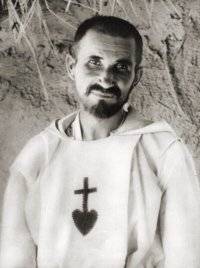
Blessed Charles de Foucauld
whatever You may do, I thank You:
I am ready for all. I accept all.
Let only Your Will be done in me,
and in all your creatures –
I wish no more than this, O Lord.


Into Your Hands I commend my soul;
I offer it to You
with all the love of my heart,
for I love You, Lord,
and so need to give myself,
to surrender myself,
into Your Hands,
without reserve,
and with boundless confidence,
for You are my Father.
All of these prayers contain a common theme: in faith, and in our life's experiences, we can see that God wants what's best for us, and knows what's best for us, better than we do ourselves.

It's easy to point to politicians and celebrities who, given near-total control over their own lives, immediately self-destruct. But the truth is, we're not somehow immune to this, either as a culture, or as individuals.  In those areas we're still trying to control, or pursuing our will over God's, the ship will run aground.  Our disobedience will hurt us, or those around us.

There's a reason for this: God doesn't usually declare something a sin just for the heck of it.  He calls something sinful because it's not good for us.  It's the same reason that parents don't let their kids just eat ice cream for every meal.  It sounds like fun, but there are long-term consequences the kids aren't considering.

In the middle of the twentieth century, we collectively stopped believing this, or perhaps, we finally just acknowledged that we no longer believed this.  We let loose in the sexual revolution with a “What damage can sex really cause?” attitude. After all, it's people doing something that is pleasurable to them: how could that really be a sin?  The voices of sanity were disregarded as Puritans afraid of pleasure.

As a result, we've reaped a culture that staggers under the weight of millions of abortions, widespread sexual assault and abuse, the exploitation of women (in everything from pornography to sex trafficking), AIDS and STDs, gay marriage, adultery, divorce, and broken homes: and that's just the start of the list.  Each of these sins creates consequences of its own, and it’s often the innocent who suffer, like the kids raised in a broken home because their dad thought extra-marital sex was harmless until it ruined his marriage.  It's as if we had all the ice cream we could handle, and were surprised to encounter obesity and heart disease.

If there's anything the last sixty years have taught us, it's that we're not great judges of what's good for us, or what's harmless fun.  Fortunately, there's a simple cure: stop trusting our animal impulses, and start trusting God.  If we want to make it to Heaven, we need to turn the wheel over to the One who knows where we're going.  The Suscipe is a great place to start, and this Advent is a great time to start.

Mary, the New Eve

0 comments
In the past few days, we've seen how Scripture depicts Mary as the Ark of the New Covenant, and Mary as the Temple Gate, surrounding Jesus Christ, our perfect Temple.  Today's the Feast of the Immaculate Conception, so it's the perfect time to add a third Scriptural depiction of Mary: Mary as the New Eve.

I. The Fall

Let's talk first a little bit about the Fall, and put all of the necessary elements in place.  First, Genesis describes the dawn of Creation in seven “days,” leading up to the account of the Fall (Gen. 1:1-2:3).  In the Garden of Eden, God creates a man, “Adam” (Gen. 2:20) and a woman, who Adam just names “Woman” at this point (Gen. 2:23).  They're both sinless and virgins in the Garden.  Their fall from grace occurs when Woman is tempted by the serpent (Gen. 3:1), and eats the fruit of the forbidden tree (Gen. 3:6).  She then brings the fruit from the tree to Adam (Gen. 3:6, Gen. 3:12).  As a result of their disobedience, sin enters the world.

God punishes Adam, Woman, and the serpent.  To the serpent, He says, “Cursed are you above all livestock and all wild animals! You will crawl on your belly and you will eat dust all the days of your life. And I will put enmity between you and the woman, and between your seed and hers; he will crush your head, and you will strike his heel” (Gen. 3:14-15).  Already, God is reassuring us that though the Fall has occurred, there's hope -- that Someone in the future will crush the head of the serpent, Satan, and free us from the slavery of sin.

The Explusion in the Caedmon manuscript (c. 1000 A.D.)
Right in the middle of the Fall, after God announces His punishment for their sins, as they're being kicked out of the Garden, Adam renames his wife Eve, “because she would become the mother of all the living” (Gen. 3:20).  This timing is pretty weird (after all, she's not a mother yet, and they're apparently still virgins until Gen. 4:1), but it'll make sense later. For now, just notice how gloomy it is.  Yes, Eve will become the mother of all the living, but because of her sins and Adam's, these children will suffer from a world now filled with pain and sin.

So mentally, the things to recall from the Fall are these: there are seven days, a garden, a man called “Adam,” a woman called “Woman,” a serpent, a tree, sinful fruit, and a “mother of all the living.” Watch for each of these elements to make a reappearance in the New Testament.

II. The Redemption

The first thing we see in John's Gospel is that his first chapter is that it's an obvious and intentional parallel to Genesis 1. Genesis 1-2 starts like this:
  • “In the beginning God created the heavens and the earth.” (Gen 1:1)
  • “the first day” (Genesis 1:1-5)
  • “the second day” (Genesis 1:6-8)
  • “the third day” (Genesis 1:9-13)
  • “the fourth day” (Genesis 1:14-19)
  • “the fifth day” (Genesis 1:20-23)
  • “the sixth day” (Genesis 1:24-31)
  • “Since on the seventh day God was finished with the work he had been doing, he rested on the seventh day from all the work he had undertaken. So God blessed the seventh day and made it holy, because on it he rested from all the work he had done in creation.” (Genesis 2:2-3).
John 1-2 starts like this:
  • “In the beginning was the Word, and the Word was with God, and the Word was God. He was with God in the beginning.” (John 1:1).
  • “the next day” (John 1:29-1:34)
  • “the next day” (John 1:35-1:42)
  • “the next day” (John 1:43-51)
  • “on the third day,” that is, three days later (John 2:1)
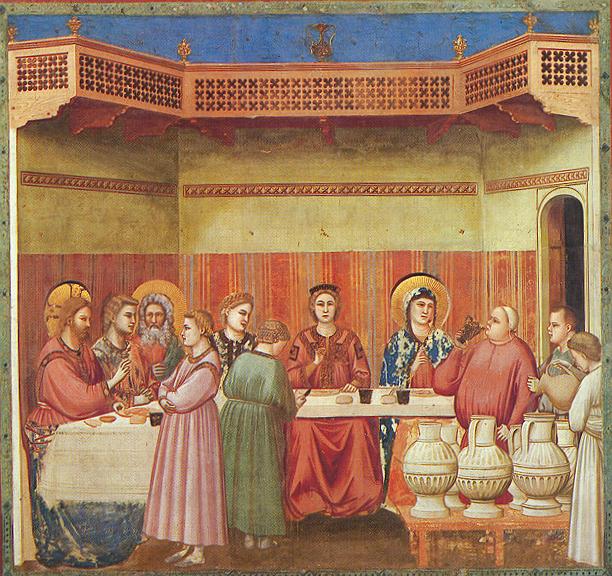
Giotto, The Wedding at Cana (14th c.)
So both begin with a description of God “In the beginning,” that is, at the dawn of time, before presenting a series of seven days. On the seventh day in Genesis, God rests. The seventh day in John's Gospel prefigures the Resurrection.  This phrase, “on the third day” always hints at the Resurrection in the New Testament (Matt. 16:21, Matt. 17:23, Matt. 20:19, Matt. 27:64, Luke 9:22, Luke 13:32, Luke 18:33, Luke 24:7, Luke 24:21, Luke 24:46, Acts 10:40, Acts 27:19, and 1 Cor. 15:4).  And what's Jesus doing on this seventh day?  He's celebrating the wedding at Cana.

It's here, at the wedding at Cana, that St. John first introduces us to Mary.  And what does Jesus call her there?  “Woman” (John 2:4).  That is, He refers to her by the name that Eve bore before the Fall, when she was free from all stain of original sin.  So we've got our seven days, and our Woman.

But if Mary is the New Eve, the New “Woman,” who is the New Adam?  St. Paul tells us that specifically, in 1 Corinthians 15:20-22:
But Christ has indeed been raised from the dead, the firstfruits of those who have fallen asleep. For since death came through a man, the resurrection of the dead comes also through a man. For as in Adam all die, so in Christ all will be made alive.
And a little later, 1 Cor. 15:45,
So it is written: “The first man Adam became a living being”; the last Adam, a life-giving spirit. 
So Paul just outright calls Christ the new Adam. No beating around the bush here.  And what about the tree? St. Paul again (Galatians 3:13),
Christ redeemed us from the curse of the law by becoming a curse for us, for it is written: “Cursed is everyone who is hung on a tree.”
So the “Tree” is the Cross. And the Resurrected Christ is the “firstfruits” of this Tree (1 Cor. 15:20-22, above).  And Elizabeth refers to Jesus as “the fruit of your womb” to Mary (Luke 1:42).  Just as the first fruit brought sin into the world from the tree, the second Fruit brings sin out of the world through the Tree.

And how did the Fruit of Mary's womb, Jesus Christ, get to the Tree?  The new Woman, Mary, started Him along His way, at the wedding of Cana.  When Mary first seeks Jesus' intervention, He replies: “O Woman, what have you to do with Me? My hour has not yet come.” (John 2:4).  This is a reference to His Passion, which is why He says in the Garden of Gethsemane, “Look, the hour has come, and the Son of Man is delivered into the hands of sinners” (Mt. 26:45).  In other words, He's warning Mary that if He grants her this request, it will start His public ministry, which only ends one way: His Death.  She persists, and He obliges  (John 2:5-11).  In other words, Mary helps lead Jesus to the Cross.  When the hour arrives, and the Passion of Christ begins in full, it's in, as I said above, the Garden of Gethsemane, the fulfillment of the Garden of Eden (Mt. 26:36).

So we've got the seven days, our new Adam, our new Woman, our Tree, our Fruit, and our Garden.  That still leaves the serpent, and the Mother of the living.  By now, you can probably figure out how each of those are fulfilled.  The serpent is Satan, and the Mother of the living is Mary.  But Mary is the mother of the spiritually living.  Check out this passage from Rev. 12:13-17,
When the dragon saw that he had been hurled to the earth, he pursued the woman who had given birth to the Male Child. The woman was given the two wings of a great eagle, so that she might fly to the place prepared for her in the wilderness, where she would be taken care of for a time, times and half a time, out of the serpent’s reach. Then from his mouth the serpent spewed water like a river, to overtake the woman and sweep her away with the torrent. 16 But the earth helped the woman by opening its mouth and swallowing the river that the dragon had spewed out of his mouth. Then the dragon was enraged at the woman and went off to wage war against the rest of her offspring—those who keep God’s commands and hold fast their testimony about Jesus.
Now remember that bit about God said to the serpent, about how He would put “enmity between you and the woman” from Genesis 3:15? Turns out, that Woman is Mary. And He promised further to put enmity “between your seed and hers; he will crush your head, and you will strike his heel” (Gen 3:15). Who's the Seed of Mary? Well, the firstfruits is Jesus -- He's uniquely qualified to be described as her Seed, because of the Incarnation and Virgin Birth (“seed” was normally measured through the biological father, as the term suggests). But Rev. 12:17 tells us that Mary's the mother of all of “those who keep God’s commands and hold fast their testimony about Jesus.”  That is, she's the Mother of all those living in Christ.

But where does Mary go from being simply the sinless Woman, to becoming the new Mother of all the living? At the exact moment when Christ is undoing the curse, from the Cross (John 19:25-27):
But standing by the cross of Jesus were His Mother, and His Mother's sister, Mary the wife of Clopas, and Mary Magdalene. When Jesus saw His Mother, and the Disciple whom He loved standing near, He said to His Mother, "Woman, behold, your son!" Then He said to the Disciple, "Behold, your Mother!" And from that hour the Disciple took her to his own home.
It's right there, right in the very midst of the Redemption! Suddenly, Adam's name change, from Woman to Eve (Gen. 3:20) seems less like awkward chronology, and more like a beautiful prefigurement of Christ giving us the Woman, Mary, as His Mother from the Cross.

There are probably plenty of parallels that I've missed, but my point is this.  In the Redemption, God restores, through Mary (the Woman) and Christ (the Seed of the Woman), what He promised would be restored.  All of the many pieces are put back together in the most incredible way: seemingly every detail, no matter how small, from the Genesis account is brought back and glorified through Christ's Passion and Resurrection.

III. Conclusion

So in the story of the Fall,  we've got a sinless virgin called Woman (Gen. 2:23) taking a sinful fruit from the tree (Gen. 3:6), bringing it to a sinless man called Adam (Gen. 2:20) in a garden (Gen. 2:8).  That's how Genesis depicts sin entering the world.

In the story of the Redemption, we've got a sinless virgin (Isa. 7:14) called Woman (John 2:4; John 19:25-27) bringing the fruit of her womb (Luke 1:42), a sinless Man called Adam (1 Cor. 15:45), to the Tree (Gal. 3:13), via a Garden (Mt. 26:46).  That's how we become freed from the curse of the Fall.

This wasn't lost on the early Church Fathers. Irenaeus points out basically everything I've said, back in 180 A.D., in his book Against Heresies.  This is a long and sometimes wordy passage, but it's worth reading carefully:
Wherefore Luke points out that the pedigree which traces the generation of our Lord back to Adam contains seventy-two generations, connecting the end with the beginning, and implying that it is He who has summed up in Himself all nations dispersed from Adam downwards, and all languages and generations of men, together with Adam himself. 
Hence also was Adam himself termed by Paul the “figure of Him that was to come,” [Romans 5:14] because the Word, the Maker of all things, had formed beforehand for Himself the future dispensation of the human race, connected with the Son of God; God having predestined that the first man should be of an animal nature, with this view, that he might be saved by the spiritual One. For inasmuch as He had a pre-existence as a saving Being, it was necessary that what might be saved should also be called into existence, in order that the Being who saves should not exist in vain.

In accordance with this design, Mary the Virgin is found obedient, saying, “Behold the handmaid of the Lord; be it unto me according to your word.” [Luke 1:38] But Eve was disobedient; for she did not obey when as yet she was a virgin. And even as she, having indeed a husband, Adam, but being nevertheless as yet a virgin (for in Paradise “they were both naked, and were not ashamed,” [Genesis 2:25] inasmuch as they, having been created a short time previously, had no understanding of the procreation of children: for it was necessary that they should first come to adult age, and then multiply from that time onward), having become disobedient, was made the cause of death, both to herself and to the entire human race; so also did Mary, having a man betrothed [to her], and being nevertheless a virgin, by yielding obedience, become the cause of salvation, both to herself and the whole human race. 
And on this account does the law term a woman betrothed to a man, the wife of him who had betrothed her, although she was as yet a virgin; thus indicating the back-reference from Mary to Eve, because what is joined together could not otherwise be put asunder than by inversion of the process by which these bonds of union had arisen; so that the former ties be cancelled by the latter, that the latter may set the former again at liberty. And it has, in fact, happened that the first compact looses from the second tie, but that the second tie takes the position of the first which has been cancelled. 
For this reason did the Lord declare that the first should in truth be last, and the last first. [Matthew 19:30, Matthew 20:16] And the prophet, too, indicates the same, saying, “instead of fathers, children have been born unto you.” For the Lord, having been born “the First-begotten of the dead,” [Revelation 1:5] and receiving into His bosom the ancient fathers, has regenerated them into the life of God, He having been made Himself the beginning of those that live, as Adam became the beginning of those who die. [1 Corinthians 15:20-22] Wherefore also Luke, commencing the genealogy with the Lord, carried it back to Adam, indicating that it was He who regenerated them into the Gospel of life, and not they Him. And thus also it was that the knot of Eve's disobedience was loosed by the obedience of Mary. For what the virgin Eve had bound fast through unbelief, this did the virgin Mary set free through faith.
All of this makes sense if the Immaculate Conception of Mary is true: if she was, in fact, free from all original sin.  Through a supernatural application of the merits of Christ, She's restored to the pure and sinless state that  Eve enjoyed.  This is symbolized by her Virginity, and is made possible by the eternal nature of Christ's Atoning Death (that is, just as He's able to atone for sins past, present, and future, and just as the graces He won for us are sufficient to keep up out of sins today, and tomorrow, so were the Graces He won sufficient to keep Mary out of sin even before His Advent).

And the Church Fathers tell us so. The clearest Church Father in developing the doctrine of original sin was St. Augustine. In the midst of  On Nature and Grace, written against the Pelagians, Augustine is talking about the reality of original and actual sin, but caveats: “We must except the holy Virgin Mary, concerning whom I wish to raise no question when it touches the subject of sins.” And again, in denying that a list of supposedly sinless Saints were, in fact, sinless, Augustine again caveats, “with this exception of the Virgin.”  In other words, even the most adamantly anti-Pelagian of Saints acknowledged that Mary wasn't to be treated simply as a sinner, or even as an ordinary Saint.  Something special and unique happened with her, as part of God's design for Redemption, something planned back in Genesis, and in fact, all the way back to “In the beginning.”  That's what we celebrate today.

Should Catholics Tithe, Even if Some Money is Misused?

0 comments
A reader e-mailed me and asked, “What would you say to a Catholic who struggles with giving money to the Church for fear of where it will go and how it will be spent?”  This is a question that a lot of Catholics find themselves asking.  There are plenty of stories about Church money having been used on things that seem stupid, or even sinful.  I'm sure everyone reading this can point to pet issues that get their blood up: if there's one thing that seems to unite us as American Catholics, it's a collective disdain for the idea of wasted tithe money.

So it really is a very good question. In one sense, it's appropriate to be wise about where we're donating, and what we're supporting.  But when we tithe, we're turning money over to God, in recognition that but for Him, we wouldn't have that (or any) blessing.  In other words, we're giving to God what is God's, as Jesus instructs us to do in Mark 12:17.  Later in Mark 12, I think we get the closest thing Jesus gives to an answer to this question.  From Mark 12:38-44,
As he taught, Jesus said, “Watch out for the teachers of the law. They like to walk around in flowing robes and be greeted with respect in the marketplaces, and have the most important seats in the synagogues and the places of honor at banquets. They devour widows’ houses and for a show make lengthy prayers. These men will be punished most severely.” 
Jesus sat down opposite the place where the offerings were put and watched the crowd putting their money into the temple treasury. Many rich people threw in large amounts. But a poor widow came and put in two very small copper coins, worth only a few cents. Calling his disciples to him, Jesus said, “Truly I tell you, this poor widow has put more into the treasury than all the others. They all gave out of their wealth; but she, out of her poverty, put in everything—all she had to live on.”
A priest pointed this out to me once, and it blew me away.  Immediately after Christ condemns the religious leaders for exploiting widows, He then praises a widow for donating to the Temple treasury anyways.  He didn't start a “Withhold your tithe” movement.  He praised the widow for giving all that she had to live on.  

In other words, if a Catholic Church bishop or priest abuses tithe money, in whatever way, that sin is on their head, not ours. If we continue to tithe, we're doing something God praises, not condemns. So that's my model: give to the Church, regardless of how Her members are going to spend it. 

The other concern I have is this.  I think we should be extremely conscious that we don't politicize the tithe, by releasing the money we owe to God only if our demands are met.  If you give, but with a bunch of strings attached, there's a sense in which you're not really giving. You're trying to use the tithe money as if it's yours. And the point is: it isn't. It's God's.  Everything you own is His.  That's the broader issue here.  We naturally want to control everything: it's our fallen nature.  We're convinced that if only we were in charge, things wouldn't go badly.  That's prideful nonsense.  The widow had the right idea.  She didn't try to control everything: she just offered up to God everything she had, and He blessed her for it. So on a level deeper than dollars and cents, this is a struggle between pride and humility.

Now, having said all of that, the Church offers opportunities to donate to specific causes.  People are often encouraged to give based on the results that specific programs accomplish: everything from Peter's Pence to diocesan appeals to parish fundraisers.  So I don't think it's inappropriate to donate wisely: to tithe in a way that you feel best helps the Body of Christ.  With the right spiritual disposition, this seems like it can even be a participation in the good of the Church: you're investing (financially and spiritually) in a specific ministry out of love.

These are questions that may have to be addressed on a case-by-case basis.  But one thing I know is this: God never condemns anyone in Scripture for tithing, and Mark 12 makes it pretty clear that this is the case even if you know that some of the money may be wasted.

Jesus Christ, the New Temple

0 comments
Christians often approach the Temple prophesies found in Ezekiel 40-48 in one of two ways.  Either they'll conclude they're about another literal Temple to be built in Jerusalem, rushing off to the latest ends-times theory, or they'll write them off as hopelessly obtuse prophesy.  I think Jesus makes it clear Who the Temple is, and I think that this has profound implications for how we understand Him, the Church, and His Mother.

I. Ezekiel and the New Temple

The last eight chapters of the Book of Ezekiel are dedicated to a single subject: the incredibly-detailed description of a Temple that Ezekiel sees in a vision.  

A bit of historical background is important here: the Book of Ezekiel covers a series of prophesies that Ezekiel recounts from about 592 - 570 B.C.  That timeline is very important (all dates here are approximate):
  • 597 B.C: The Babylonians depose King Jehoiachin of Judah, sending him and some of the prominent Jews (including a then twenty-five year old Ezekiel) into exile.  Thus begins the Babylonian Captivity, although many Jews are still in Jerusalem.
  • 592 B.C.: Ezekiel has his first prophetic experience (described in Ezekiel 1), and spends the next five years foretelling the destruction of the Temple of Jerusalem.
  • 587 B.C.: The Babylonians destroy the Temple of Jerusalem (the First Temple).
  • 573 B.C.: Ezekiel has the Temple visions, in “the twenty-fifth year of our exile, at the beginning of the year, on the tenth of the month, in the fourteenth year after the fall of the city” (Ezekiel 40:1).  
  • 538 B.C.: The Babylonian Captivity ends. Ezekiel is dead by this point, but the events are described in the Book of Daniel.
In other words, at the time Ezekiel is prophesying and writing, Israel is being crushed by the Babylonians and driven into exile.  And these final eight chapters in particular are written after Jerusalem is destroyed, and all looks lost for the Jewish people. So Ezekiel's Temple vision is important because, if nothing else, it's God showing His people that the fight isn't over, and that they'll come out triumphant.

II. The Second Temple

The visions Ezekiel receives are of a Temple far more incredible than the one that they lost in 587 B.C. In fact, the Temple has some apparently supernatural properies: the cleansing waters flowing from its east side even turned salt water fresh (Ezekiel 47:8). So when the Jews were finally returned from exile, they were quite reasonably excited about the new Temple. But after their return, they're instructed to build a Second Temple that's apparently inferior to the First. In fact, even as the crowds are cheering the groundbreaking of the Second Temple, “many of the priests and Levites and heads of fathers’ households, the old men who had seen the first temple, wept with a loud voice when the foundation of this house was laid before their eyes” (Ezra 3:12).  This Second Temple was not the great Temple Ezekiel had described.

But God hadn't broken His promises.  In fact, He acknowledged that this Second Temple appeared inferior to the First, but promised it would be destined for greater glory, and that He remained faithful to what He had promised (Haggai 2:1-9):
On the twenty-first of the seventh month, the word of the LORD came by Haggai the prophet saying, “Speak now to Zerubbabel the son of Shealtiel, governor of Judah, and to Joshua the son of Jehozadak, the high priest, and to the remnant of the people saying, ‘Who is left among you who saw this temple in its former glory? And how do you see it now? Does it not seem to you like nothing in comparison? But now take courage, Zerubbabel,’ declares the LORD, ‘take courage also, Joshua son of Jehozadak, the high priest, and all you people of the land take courage,’ declares the LORD, ‘and work; for I am with you,’ declares the LORD of hosts.  ‘As for the promise which I made you when you came out of Egypt, My Spirit is abiding in your midst; do not fear!’ 
For thus says the LORD of hosts, ‘Once more in a little while, I am going to shake the heavens and the earth, the sea also and the dry land. I will shake all the nations; and they will come with the wealth of all nations, and I will fill this house with glory,’ says the LORD of hosts. ‘The silver is Mine and the gold is Mine,’ declares the LORD of hosts. ‘The latter glory of this house will be greater than the former,’ says the LORD of hosts, ‘and in this place I will give peace,’ declares the LORD of hosts.”
As time goes on, this prophesy starts to become clearer.  From Malachi we can say both why the Second Temple would be greater than the First, and how the Lord intended to fill His House with glory: by entering the Temple Himself: “Then suddenly the Lord you are seeking will come to His Temple; the messenger of the covenant, whom you desire, will come” (Malachi 3:1).  It's in Jesus Christ that God fulfills both these Second Temple prophesies, and the Temple Prophesies of Ezekiel.

III. Jesus Christ, the New Temple


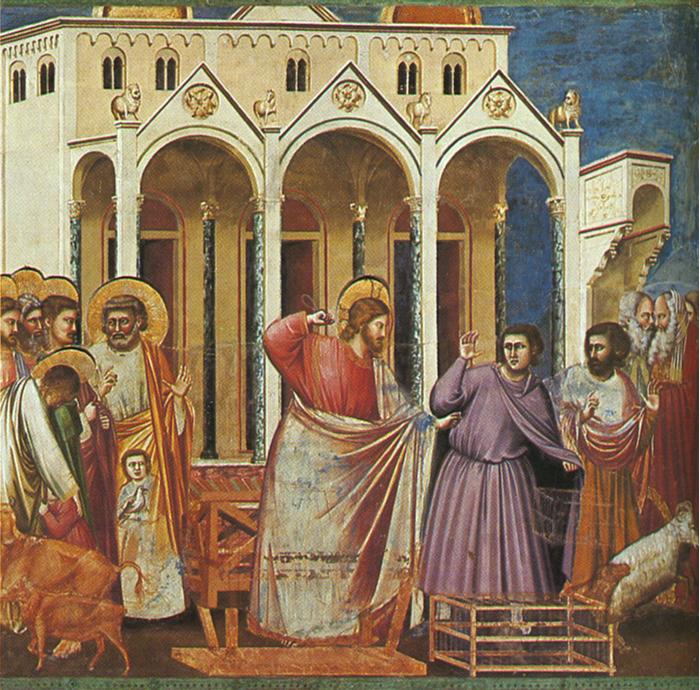
Giotto, Casting Out the Money Changers (14th century).
Jesus Christ IS the LORD of host.  And He fulfills the prophesies in Haggai 2:1-9 and Malachi 3:1 by visiting the Second Temple in Person.   He first went as an Infant, where He's blessed by Simeon (Luke 2:27-35), and by the age of twelve, it was here that He taught the scholars of the law (Lk. 2:46-47).  As an adult, He purified the Temple, and in the process, referred to the Temple as “My House” (Matthew 21:12-13).  He then proceeded to teach from the Temple courts (Mt. 21:23).  Because this is the Temple that the Incarnate Christ frequented, it possessed the Glory of the LORD in a way that the first Temple didn't.

But even as He purifies and glorifies the Second Temple, He shows Himself to be the greater Temple: the One that Ezekiel prophesied.  He returns to this theme repeatedly.  In Matthew 12:6, He makes the shocking claim, “I tell you that something greater than the temple is here” before declaring Himself “Lord of the Sabbath” (Mt. 12:8).  It's hard for modern readers to get just how shocking this claim is, but consider this: when Christ foretells the destruction of the Second Temple, the Disciples assume He's referring to His Second Coming at the end of the world (Mt. 24:1-3).

The most important of the claims Christ makes about Himself as the Temple is found in John 2:18-22,
The Jews then responded to him, “What sign can you show us to prove your authority to do all this?” 

Jesus answered them, “Destroy this temple, and I will raise it again in three days.” 
They replied, “It has taken forty-six years to build this temple, and you are going to raise it in three days?” But the temple he had spoken of was his body. After he was raised from the dead, his disciples recalled what he had said. Then they believed the scripture and the words that Jesus had spoken.
This claim that would be used at Jesus' trial to condemn Him for blasphemy, with the speakers claiming that Jesus had actually threatened to destroy the Temple Himself (Matthew 26:59-61).  And it was for this claim that He was mocked from the Cross (Mt. 27:40).

But this notion that Jesus' Body is the New Temple is an incredible one.  We see it all over the place, once we know to look for it.  For example, when Jesus died on the Cross, the veil of the Second Temple was torn in two (Matthew 27:51, Mark 15:38, Luke 23:45).  Hebrews 10:20 specifically cites to this torn veil as a symbol of the opening of Heaven, in that “we have confidence to enter the Most Holy Place by the Blood of Jesus, by a new and living way opened for us through the curtain, that is, His Body.”  So that's yet another image of Christ as the New Temple.

And it's here on the Cross that a soldier lances Jesus' side, which flows forth Blood and water (John 19:34).  Medically, this shows that He's Dead, and probably that His pericardial sac had burst.  But this also has symbolic significance (1 John 5:6-8).  The water and Blood parallel Baptism and the Eucharist.  This image fulfills Ezekiel's prophesy that rivers of saving waters will flow forth from the side of the Temple:  “Swarms of living creatures will live wherever the river flows. There will be large numbers of fish, because this water flows there and makes the salt water fresh; so where the river flows everything will live” (Ezekiel 47:9).  Indeed, the saving waters are seen both in the waters showing up that Christ's saving Death on the Cross was accomplished, and in the waters of Baptism by which we're saved (1 Peter 3:21).

Fascinatingly, Jesus actually hints at all of this early on, in John 7:37-38.  I'll let Mark Shea explain:
So, during the Feast of Tabernacles, Jesus announces to the crowd, “If any one thirst, let him come to me and drink. He who believes in me, as the scripture has said, ‘Out of his heart shall flow rivers of living water’” (Jn 7:37-38). As we already know, Jesus uses the image of living water to refer to the Holy Spirit (cf. Jn 4). Yet curiously, there’s no passage in Old Testament Scripture that says, “Out of his heart shall flow rivers of living water.” What, then, is Jesus referring to?

He is referring to Ezekiel 47 and following. After all, Jesus has already told us what the true temple is when He declared, “Destroy this temple, and in three days I will raise it up” (Jn 2:19). As John makes crystal clear, “He spoke of the temple of his body” (Jn 2:21). So Jesus is declaring to all at the Feast of Tabernacles that Ezekiel’s vision is not a physical description of a stone building, but a spiritual description of the true temple, the Body of Christ. For the same reason, John says that Jesus “tabernacled” among us (Jn 1:14) when He became man. Paul makes the same connection, referring both to individual Christians and to the mystical Body of Christ as the temple (1 Cor 3:16-17; Eph 2:21).
Hopefully, you've noticed that Ezekiel's references to the New Temple don't just prefigure Christ's physical Body.  They also prefigure His Mystical Body, the Church (Romans 12:5; 1 Corinthians 12:12, 27).  His physical Body flowed forth the waters from His Heart, burst with love; His Mystical Body flows forth the waters of Baptism, from the heart of the Church.

IV. Mary as the Temple Gate

Given all of this, I wanted to focus on the Marian implications as well, based on a question I'd received on that recently.  Saturday's post showed how Scripture presents Mary as the Ark of the New Covenant, with her visitation of Elizabeth (Luke 1:39-56) a remarkable parallel to the Ark of the Covenant's visitation of Obededom (2 Samuel 6:2-14).  But what do we mean when we call her the Temple Gate?  It's a reference to a specific part of Ezekiel's prophesy (Ez.44:1-2):
Then the man brought me back to the outer gate of the sanctuary, the one facing east, and it was shut. The LORD said to me, “This gate is to remain shut. It must not be opened; no one may enter through it. It is to remain shut because the LORD, the God of Israel, has entered through it.
If Jesus Christ is the Temple, who or what is the Temple Gate?  It's Mary.  Mary is the Gate through which Jesus entered the world.  John 1:14 says Jesus “tabernacled” among us.  This was first accomplished inside Mary's womb, just as the gate surrounds the Temple where the tabernacle is stored.  She was given the astonishing task to nurture, guard, and nourish the omnipotent God of the Universe in her womb, where He dwelt for nine months.  At His most vulnerable, as a tiny Fetus, He chose to rely on her.

Of course, if Mary is the Temple Gate, the obvious implication of Ezekiel 44:1-2 would be that she was permanently consecrated to God in a very particular way, a way that necessitated her perpetual Virginity.  No one else entered the world through the Temple Gate.  Here's where it gets interesting.  It so happens that the Apostles taught that Mary was, in fact, a perpetual Virgin, if the earliest Christians can be trusted. Shea again:
Patristic sources who affirm that Mary’s perpetual virginity was taught by the apostles include the author of the Protoevangelium of James, Origen, Hilary of Poitiers, Athanasius, Epiphanius of Salamis, Jerome, Didymus the Blind, Ambrose of Milan, Pope Siricius I, Augustine, Leporius, Cyril of Alexandria, Pope Leo I, and the dogmatic teaching of the Second Ecumenical Council of Constantinople. And they’re only the beginning.
All of this starts to fit together neatly.  Jesus's Body (both Physical and Mystical) is the Temple.  Mary is the Temple Gate, since she's our Theotokos (God-bearer), to borrow the title used to refer to her at the Council of Ephesus in 431.

But this suggests something more: not only is Mary pure and consecrated to God in a particular way, but she's also a mother and protector.  Gates aren't just containers, they're defensive fortifications.  And that gets us back to passages like Revelation 12, where we see the Mother of Jesus in Heaven (Rev. 12:1-5), as part of some pretty epic spiritual warfare against the devil.  Satan keeps attacking Mary, who remains supernaturally protected from his advances (Rev. 12:13-16), which comports with the whole Catholic belief that she was kept free from sin .  When the devil can't get to Mary, he goes for us: “Then the dragon was enraged at the woman and went off to make war against the rest of her offspring—those who obey God’s commandments and hold to the testimony of Jesus” (Rev. 12:17).  This certainly looks like Scripture is depicting Mary as a mother and a sure defense for Christians.

The Harvest is Great, but the Laborers are Few: St. Francis Xavier's Lament

0 comments
This is from Saturday's Office of Readings, and it's two excerpts from letters written by St. Francis Xavier to St. Ignatius Loyola.  Xavier and Ignatius are the sixteenth-century co-founders of the Society of Jesus, the Jesuits, and they were incredibly effective missionaries, travelling the world to spread the Gospel.  They're directly and indirectly responsible for more conversions to Catholicism than perhaps anyone in the modern world.

At the time St. Francis Xavier writes the below letters, it's the mid-1540s, and he's in India, converting innumerable souls to Christ.  His lament is essentially that “The harvest is great, but the laborers are few” (Matthew 9:37), and that there are too many comfortable Christians unwilling to do anything to spread the Gospel:
St. Ignatius of Loyola (left) and St. Francis Xavier
We have visited the villages of the new converts who accepted the Christian religion a few years ago. No Portuguese live here—the country is so utterly barren and poor. The native Christians have no priests. They know only that they are Christians. There is nobody to say Mass for them; nobody to teach them the Creed, the Our Father, the Hail Mary and the Commandments of God’s Law.

I have not stopped since the day I arrived. I conscientiously made the rounds of the villages. I bathed in the sacred waters all the children who had not yet been baptized. This means that I have purified a very large number of children so young that, as the saying goes, they could not tell their right hand from their left. The older children would not let me say my Office or eat or sleep until I taught them one prayer or another. Then I began to understand: The kingdom of heaven belongs to such as these.

I could not refuse so devout a request without failing in devotion myself. I taught them, first the confession of faith in the Father, the Son and the Holy Spirit, then the Apostles’ Creed, the Our Father and Hail Mary. I noticed among them persons of great intelligence. If only someone could educate them in the Christian way of life, I have no doubt that they would make excellent Christians.

Many, many people hereabouts are not becoming Christians for one reason only: there is nobody to make them Christians. Again and again I have thought of going round the universities of Europe, especially Paris, and everywhere crying out like a madman, riveting the attention of those with more learning than charity: “What a tragedy: how many souls are being shut out of heaven and falling into hell, thanks to you!”

I wish they would work as hard at this as they do at their books, and so settle their account with God for their learning and the talents entrusted to them.
 
This thought would certainly stir most of them to meditate on spiritual realities, to listen actively to what God is saying to them. They would forget their own desires, their human affairs, and give themselves over entirely to God’s will and his choice. They would cry out with all their heart: Lord, I am here! What do you want me to do? Send me anywhere you like—even to India.
Even to India, indeed. Here's a map showing St. Francis Xavier's missionary journeys:


For the most part, he was going to places where Christianity had never even been heard of, and great miracles accompanied him.  There are accounts of him speaking in tongues (for example, preaching the Gospel in Chinese, before learning to speak Chinese).  Innumerable Christians living today, particularly in Asia and Oceania, owe their salvation, in some part, to the work of St. Francis Xavier.

Francis' lament was simply that so many more were qualified and capable of preaching the Gospel, but cared for books more than souls.  As Christians, let it never be said of us, “What a tragedy: how many souls are being shut out of heaven and falling into hell, thanks to you!”  Finally, Christ says (Mt. 9:37-38), “The harvest is great but the workers are few. Ask the Lord of the harvest, therefore, to send out workers into his harvest field.”  Pray for vocations, and pray that God raises up more Christians like St .Francis Xavier to proclaim His holy Gospel throughout the world.

Mary, the Ark of the New Covenant

0 comments
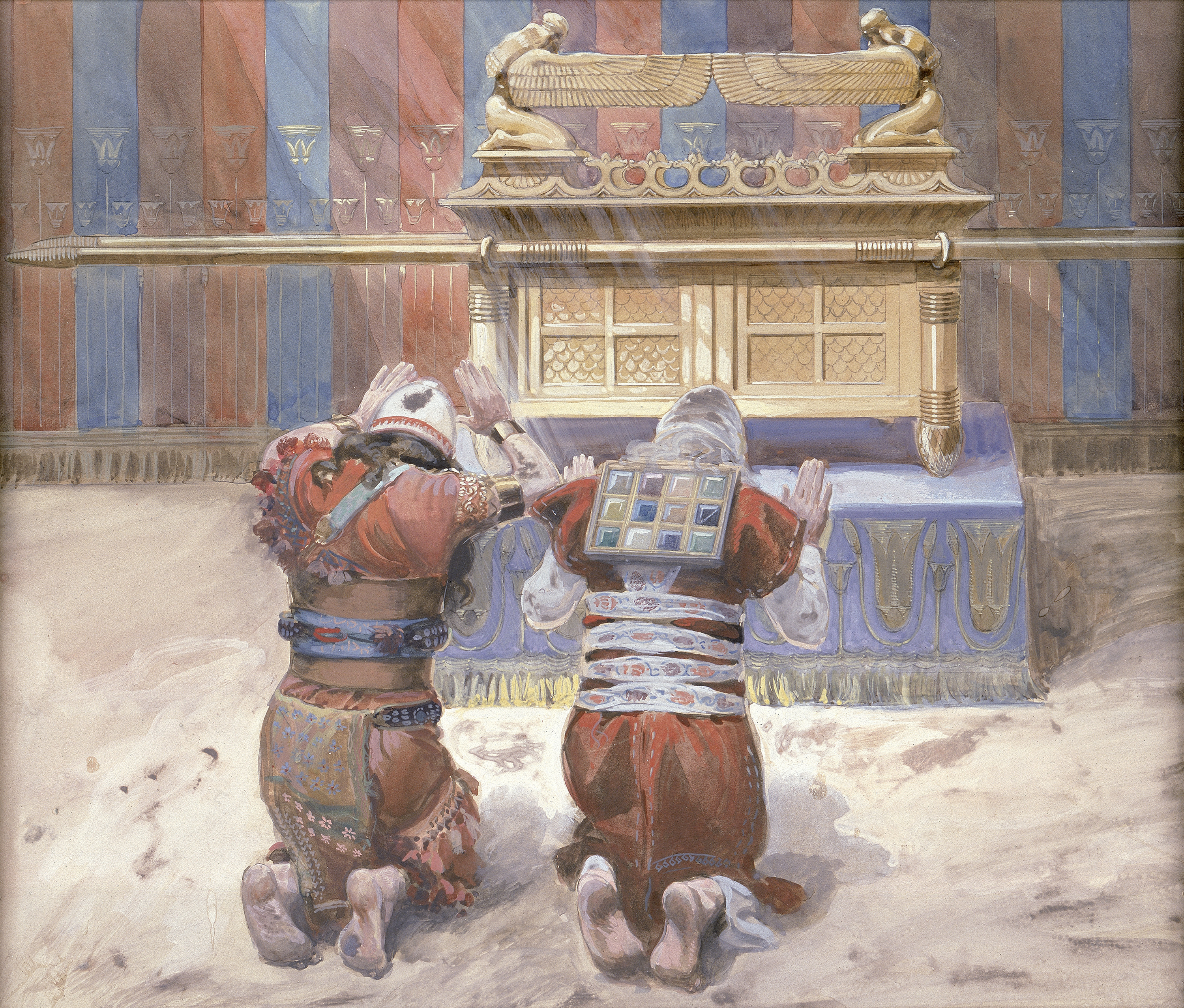
In the comments, Waterloo Region African asked how early Christians thought of Mary as the New Ark.  I think that the best answer is that St. Luke lays this out pretty clearly in the first chapter of his Gospel.  He draws some incredibly obvious parallels between Mary's visit to Elizabeth and David's movement of the Ark through the hill-country of Judah. These are ones that a well-read Jewish audience should have been able to pick up on, and it helps reveal who Luke is telling us Jesus is, as well as the role he says Mary plays.

Start with the Old Testament passage.  From 2 Samuel 6:2-14:
And David arose and went with all the people who were with him from Ba'ale-judah, to bring up from there the ark of God, which is called by the name of the LORD of hosts who sits enthroned on the cherubim.

And they carried the ark of God upon a new cart, and brought it out of the house of Abin'adab which was on the hill; and Uzzah and Ahi'o, the sons of Abin'adab, were driving the new cart with the ark of God; and Ahi'o went before the ark. And David and all the house of Israel were making merry before the LORD with all their might, with songs and lyres and harps and tambourines and castanets and cymbals. And when they came to the threshing floor of Nacon, Uzzah put out his hand to the ark of God and took hold of it, for the oxen stumbled. And the anger of the LORD was kindled against Uzzah; and God smote him there because he put forth his hand to the ark; and he died there beside the ark of God. And David was angry because the LORD had broken forth upon Uzzah; and that place is called Pe'rez-uz'zah, to this day.

And David was afraid of the LORD that day; and he said, "How can the ark of the LORD come to me?" So David was not willing to take the ark of the LORD into the city of David; but David took it aside to the house of O'bed-e'dom the Gittite. And the ark of the LORD remained in the house of O'bed-e'dom the Gittite three months; and the LORD blessed O'bed-e'dom and all his household.

And it was told King David, "The LORD has blessed the household of O'bed-e'dom and all that belongs to him, because of the ark of God." So David went and brought up the ark of God from the house of O'bed-e'dom to the city of David with rejoicing; and when those who bore the ark of the LORD had gone six paces, he sacrificed an ox and a fatling. And David danced before the LORD with all his might; and David was girded with a linen ephod.
Here are the seven things to notice:
  1. David “arose and went” to move the Ark.
  2. They're in Judah (they start out from Baale of Judah)
  3. They're in the hill country: Abinadab's house is on one of these hills, and it's navigating these hills that causes the ox to stumble, the Ark to totter, and Uzzah to touch the Ark, which causes God to strike him dead.
  4. David, vexed by the death of Uzzah, asks, “How can the ark of the LORD come to me?”
  5. Obededom and his household are blessed by the presence of the Ark. 
  6. David dances before the Ark.
  7. The Ark stays with Obededom for three months.
Compare this with Luke 1:39-45,56 (I'm skipping over the beautiful Magnificat for the sake of brevity):
In those days Mary arose and went with haste into the hill country, to a city of Judah, and she entered the house of Zechari'ah and greeted Elizabeth. And when Elizabeth heard the greeting of Mary, the babe leaped in her womb; and Elizabeth was filled with the Holy Spirit and she exclaimed with a loud cry, "Blessed are you among women, and blessed is the fruit of your womb! And why is this granted me, that the mother of my Lord should come to me? For behold, when the voice of your greeting came to my ears, the babe in my womb leaped for joy. And blessed is she who believed that there would be a fulfilment of what was spoken to her from the Lord." [...] And Mary remained with her about three months, and returned to her home.
And again, the seven things to notice:
  1. Mary “arose and went” to transport her and her Son to the household of Elizabeth.
  2. They're in Judah.
  3. They're in the hill country.
  4. Elizabeth's question mirrors David's, but is asked out of joy, rather than vexation: “And why is this granted me, that the mother of my Lord should come to me?”
  5. Elizabeth is blessed by the presence of Mary (“the mother of my Lord”).
  6. John the Baptist dances in the womb upon hearing Mary's greeting.
  7. Mary stays for three months.
So both Mary and David “arose and went” on these journeys, to the same place (the hill-country in Judah) for the same length of time (three months).  David dances before the Ark, and John the Baptist dances before Mary.  David asks, “How can the ark of the LORD come to me?” Elizabeth asks, “And why is this granted me, that the mother of my Lord should come to me?”  And Elizabeth was blessed to be visited by the Mother of the Lord, just as Obededom was blessed to be visited by the Ark.

Now, St. Luke chose to include all of those minor details (including that it was the hilly country, and that Mary stayed for three months) for a reason.   Likewise, he chose to words things in the precise way that he did for a reason - to say that she “arose and went,” for example (the only time he uses this Old Testament expression in his Gospel).

There are three reasons that it makes sense for Luke to choose this particular passage (2 Samuel 6), of all the Old Testament descriptions of the Ark, to show the parallel to Mary:
  • It reminds us that even at this point, immediately after the Annunciation, Mary is carrying Jesus Christ. 2 Samuel 6:2 reminds us that it is “the LORD of hosts who sits enthroned on the cherubim.”  That's an important reminder, in the middle of a chronological retelling of a series of events.
  • It's our first hint that Jesus Christ is Lord.  Again, the Ark contained the enthroned LORD of hosts.  If Mary is the new Ark, that means that Jesus is the enthroned LORD of hosts.  We take this for granted today.  At the time Luke is writing, it's a shocking claim.
  • It shows how Mary is set aside by God.  This is the exact passage in which Uzzah is struck dead for touching the Ark.  This helps explain Mary's consecrated Virginity -- her strange response in Luke 1:34, for example, or the fact that the Isaiah 7:14 prophesy required the Christ to be both conceived and born of a Virgin, when a Virgin conception would have been sufficient to establish the miracle.  These odd details make perfect sense if Mary is the new Ark.  
Ark of the Covenant Monstrance at
St. Stanislaus Catholic Church, Chicago
Nor is St. Luke the only one New Testament writer to have this insight. In Revelation 11:19-12:2, here's what John sees:
Then God's Temple in Heaven was opened, and the Ark of His Covenant was seen within His Temple; and there were flashes of lightning, voices, peals of thunder, an earthquake, and heavy hail. And a great portent appeared in heaven, a woman clothed with the sun, with the moon under her feet, and on her head a crown of twelve stars; she was with Child and she cried out in her pangs of birth, in anguish for delivery.
Sure enough, this woman “brought forth a Male Child, One who is to rule all the nations with a rod of iron” (Rev. 12:5).  That is, we're dealing with the Mother of Jesus here.  It's true that this passage likely refers to the Church as well as Mary,  But once you read Luke 2, it's hard to avoid the conclusion that it's not for nothing that John is shown the Ark immediately before being shown the Mother of God.

For more on this subject, there's a helpful article here.  It includes other interesting details, like the connection between the “overshadowing” of Mary in Luke 1:35 and the overshadowing of the Shekinah Glory Cloud in the Old Testament.

Does Psalm 69:8 Prove that Mary Had Other Children?

0 comments
Cornelis van Cleve, Virgin and Child (c. 1550)
Yesterday, Michael Addison raised the argument in the comments that Psalm 69:8 disproves the perpetual Virginity of Mary.  The Psalm contains a lot of Messianic elements (various lines are explicitly applied throughout the New Testament to Christ), and v. 8 says, “I am a stranger to my brothers, an alien to my own mother’s sons.”  The argument is that this Old Testament passage shows that the Virgin Mary had other children.

It's a clever argument, but there are at least three alternatives to bear in mind.  First, the Psalms are distinct from traditional prophesy (like Isaiah or Ezekiel, e.g.). The present concerns of the Psalmists are blended with foreshadowing of Christ. Psalm 69 is no exception. On one level, this Psalm is about someone who was falsely accused of theft (Psalm 69:4). Plenty of things in Psalm 69 foreshadow Christ, but that doesn’t mean every element is true of Him. For example, Psalm 69:5 says, “You know my folly, O God; my guilt is not hidden from you.” And Christ is sinless, of course. So the first option is simply that v. 8 isn’t strictly Christological.

Caravaggio, Adoration of the Shepherds (1609)
Second, even if Psalm 69:8 applies to Christ, the “mother” may not be Mary – it may mean Israel. The full sentence (v.8-9), taken as a whole, says, “I am a stranger to my brothers, an alien to my own mother’s sons; for zeal for Your house consumes me, and the insults of those who insult you fall on me.” That is, the image is of mother Israel, and her sons, the Jewish people, in their home, the house of the Lord, the Temple of Jerusalem.

Third, even if Psalm 69:8 applies to Christ, and even if the mother is Mary, the other children need not be biological children. Revelation 12:17 specifically says that the Mother of Christ’s children are “those who obey God’s commandments and hold to the testimony of Jesus.”

So the three options are that v. 8 refers to (1) something exclusive to the Psalmist, (2) Israel, and (3) Christians. Of the three, I think (2) is the strongest, but any are possible.  In any case, none of this strikes me as a compelling reason to declare the Church wrong (from the early Christians onward) about the perpetual Virginity of Mary.