Do Ecumenical Councils Eliminate the Need for the Papacy?

0 comments
A friend asked me about an argument against Catholicism raised by Fr. Viktor Potapov, an Orthodox priest based here in D.C., in Chapter Ten of his Orthodoxy and Heterodoxy.  The argument essentially says that the early Church believed in conciliar infallibility, but that the West replaced this idea with papal infallibility.  Fr. Potapov first explains that, “since the opinion of the whole Church is made manifest at Ecumenical Councils, the Ecumenical Councils are the infallible custodians and interpreters of Divine Revelation.” Catholics agree with this, but Fr. Potapov claims that papal infallibility undermines this idea:
This view of the infallibility of the universal Church, which comes from Christ and His apostles, was common in Christianity during the course of the first centuries and remained unchanged in the Orthodox Church. But in the West, side by side with other deviations, this view of the infallibility of the Church also under-went distortion. The Roman bishop was always considered one of the members of the council, and he submitted to its decisions. But, in the course of time, the pope of Rome began to attribute the privilege of ecclesiastical infallibility to himself alone and, after long efforts, finally secured the recognition of his absurd pretension at the Vatican Council of 1870.
This distorts Catholic teaching badly: we don't believe that only the pope is infallible.  The reason that Orthodox apologists will be able to find innumerable instances of Ecumenical Councils acting infallibly is because Ecumenical Council can act infallible. Catholicism affirms this, and always has. So this argument doesn't prove the case against the papacy at all.

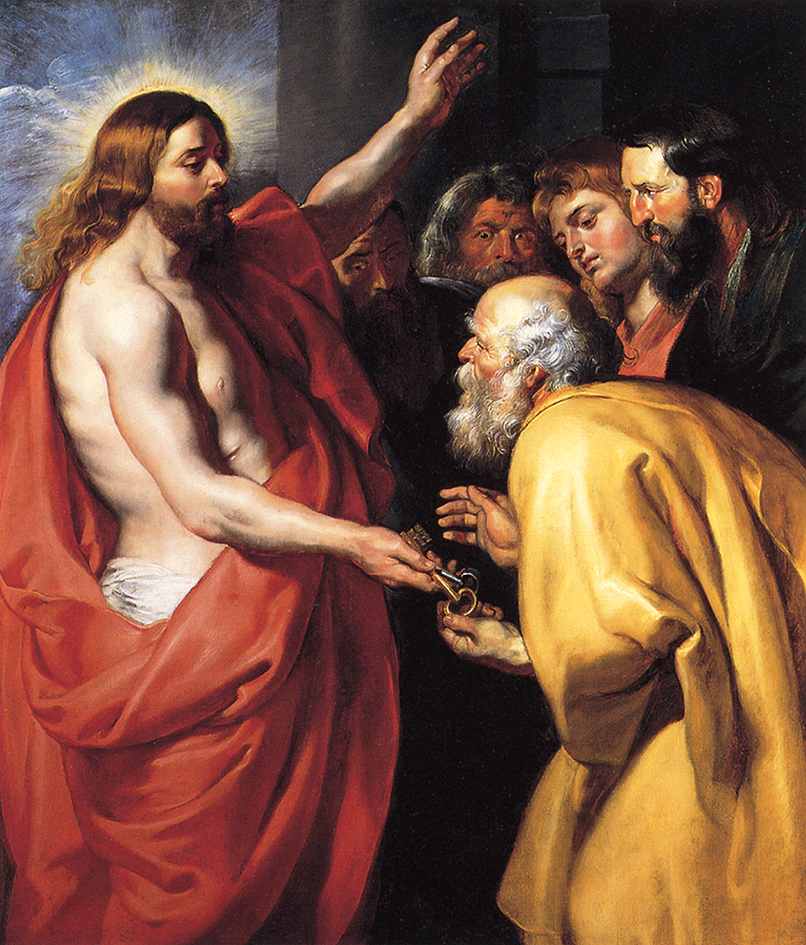
Peter Paul Rubens,
Christ Surrendering the Keys to St. Peter (1614)
In other words, it's a false choice between papal infallibility and conciliar infallibility. We believe in both.  And Scripture seems to support both, as well.  Let me give you a couple examples from the Bible, where we see parallel Petrine and conciliar infallibility / authority:
  • In Acts 15, the Apostles settle the dispute over the Judaizers by organizing the Council of Jerusalem. Did the Council have the capacity and authority to settle this dispute? Yes (see Acts 15:28).
  • In Acts 10:1-11-18, St. Peter (on his own) settled a nearly-identical dispute involving the Judaizers. Did St. Peter individually have the capacity and authority to settle this dispute? Yes (see Acts 10:44).
So it's not “God works through St. Peter” or “God works through the Council.” He works through both. Next:
  • In Matthew 18:15-18, Jesus gives the Church collectively the power to bind and loosen.
  • In Matthew 16:17-19, Jesus gives St. Peter individually the power to bind and loosen.
Even more than the first, this second example reflects the two distinct (but interconnected) ways that the Holy Spirit works: through the Petrine Office, and through the Ecumenical Council.  That is, why is Matthew 16:17-19 in Scripture, if it's not just redundant of Matthew 18:15-18?

But let me go ahead and turn this objection on its head. Three things to consider:
  1. The papacy is necessary for the existence of a valid Ecumenical Council. Without the papacy, there is no objective reason to accept the Council of Chalcedon (451 A.D.), while rejecting the Second Council of Ephesus (449 A.D.). More on this subject here, here, and here.

    As further proof, how many Ecumenical Councils has the East have since they broke off from Rome? Nobody knows, including the Orthodox themselves: some say none, some say two. Without the pope, there's no way of even determining if a Council is Ecumenical or not.

    On the other hand, we can tell you how many Ecumenical Councils the Church has had since the schism: fourteen, for a total of twenty-one.

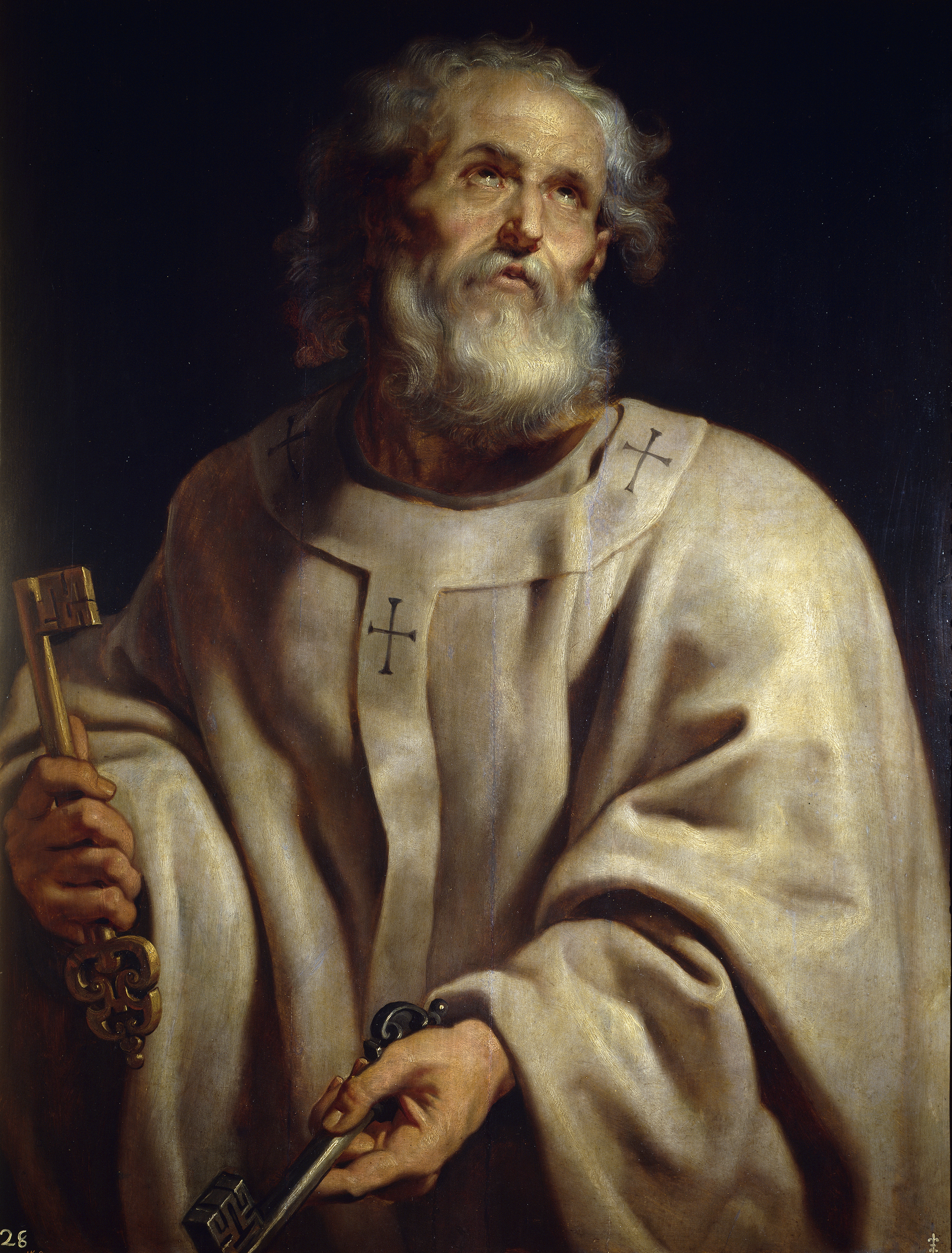
  2. Peter Paul Rubens, Saint Peter (1612)
  3. The First Vatican Council is an Ecumenical Council. This is an obvious point, but one that gets overlooked. Not only do Ecumenical Councils not disprove papal infallibility, but they prove it. If you accept Vatican I as an Ecumenical Council, you have to accept papal infallibility as well, since Vatican I tells you to.

  4. The Orthodox, in rejecting the papacy, act contrary to the Ecumenical Councils.  Obviously they reject the First Vatican Council.  But that's not what I mean.  I mean that even the first Seven (pre-schism) Ecumenical Councils, lay out papal primacy unambiguously.

    Canon 3 of the First Council of Constantinople in 381 says, “Let the Bishop of Constantinople, however, have the priorities of honor after the Bishop of Rome, because of its being New Rome.” Constantinople's authority was (a) always secondary to Rome's, and (b) always based off of its relationship to Rome.

    Phillip Schaff, the Protestant historian, remarked: “Even the last clause, it would seem, could give no offence to the most sensitive on the papal claims, for it implies a wonderful power in the rank of Old Rome, if a see is to rank next to it because it happens to be 'New Rome.'” More on that here.

    That is, as of 381, the whole Church was ready to acknowledge Rome as the Primal See. How, then, can the Orthodox justify breaking away from this See in 1054? It seems to me that any answer would devolve into “you have to follow the primal see only if you happen to agree.”  But that's the exact logic that brings us to Evangelicalism's theological anarchy.
So if you see the need for Ecumenical Councils, you should equally see the need for the papacy (the office that makes such Councils possible and enforceable).

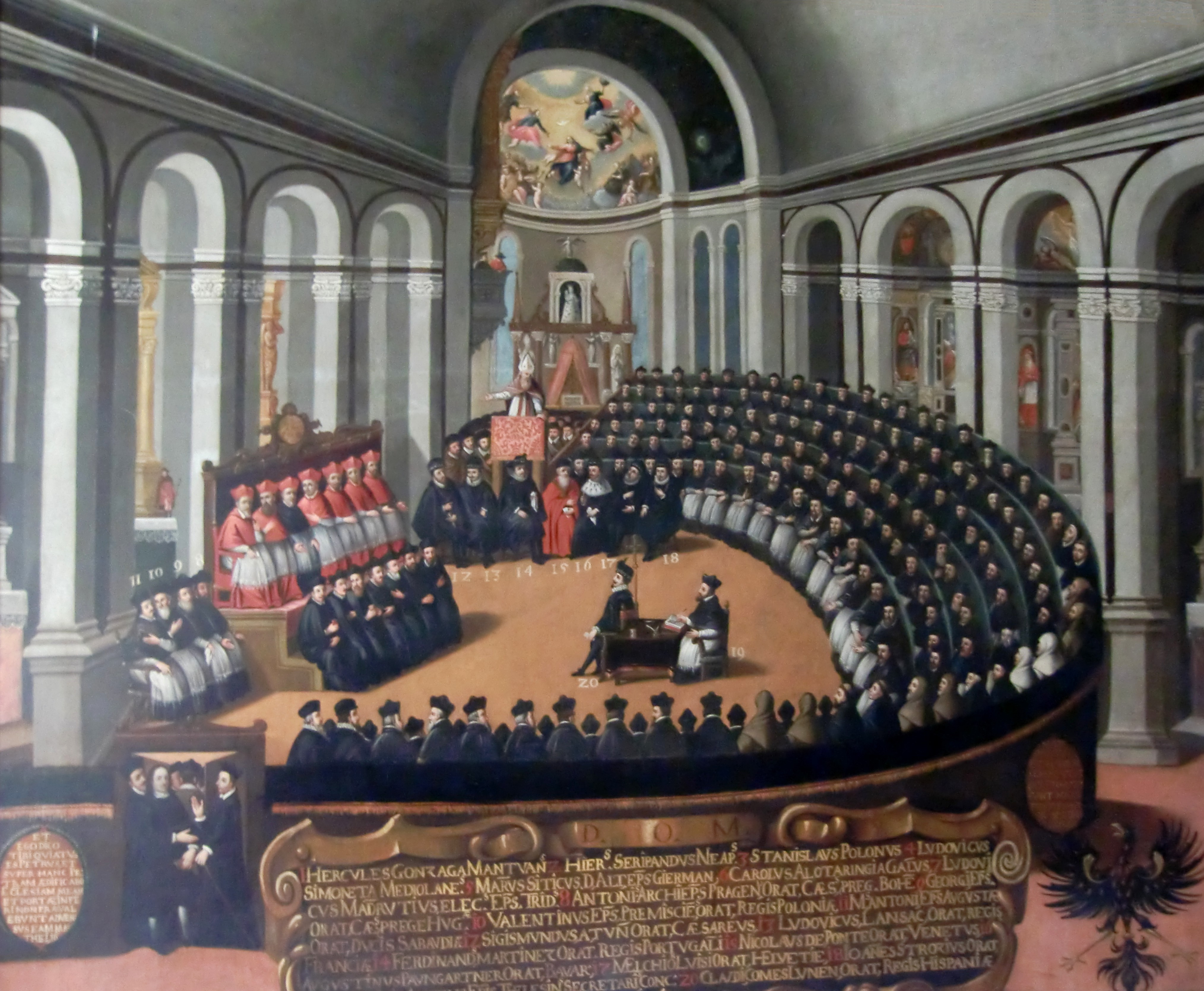
The Council of Trent
So, where there is confusion about the validity of a certain papal claimant, the Church can clarify it at Council; likewise, where there is confusion about the validity of a certain Council, the pope can clarify it.  This rightly mirrors the relationship God's own Sovereignty works: the Father endorses the Son (John 5:31-32; Matthew 17:5), and the Son reveals the Father (John 14:7-9).

Each Person of the Trinity is wholly Sovereign, but there's no risk of contradiction because they are in Divine harmony. Likewise, we don't have to worry about papal infallibility and conciliar infallibility contradicting, since they're similarly in harmony (governed, as each are, by the Holy Spirit). These objections are from mere man's way of thinking, not Christ's.

John Piper v. John Piper on the Apostles' Creed

0 comments
Harrowing of Hell (15th c.)
The Apostles' Creed declares that Jesus “was conceived by the Holy Spirit, born of the Virgin Mary, suffered under Pontius Pilate, was crucified, died and was buried.  He descended into hell.  On the third day, He rose again from the dead. He ascended into heaven, and is seated at the right hand of God the Father almighty.  From there He will come to judge the living and the dead.” I've explained before that this descent into hell refers not to damnation, but to Christ liberating the souls of the righteous from Sheol, in what's known as the harrowing of hell, and that this harrowing of hell is solidly Biblical.

But increasingly, leading Evangelicals now reject this part of the Creed, as the Washington Post reports in a very well-written piece:
On Good Friday, Jesus told the Good Thief crucified alongside him that “today you will be with me in paradise,” according to Luke’s Gospel. “That’s the only clue we have as to what Jesus was doing between death and resurrection,” John Piper, a prominent evangelical author and pastor from Minnesota, has said. “I don’t think the thief went to hell and that hell is called paradise.”[...]

Wayne Grudem, a former president of the Evangelical Theological Society, says the confusion and arguments could be ended by correcting the Apostles’ Creed “once and for all” and excising the line about the descent.

“The single argument in its favor seems to be that it has been around so long,” Grudem, a professor at Phoenix Seminary in Arizona, writes in his “Systematic Theology,” a popular textbook in evangelical colleges. “But an old mistake is still a mistake.”

Grudem, like Piper, has said that he skips the phrase about Jesus’ descent when reciting the Apostles’ Creed.
John Piper
Taylor Marshall, over at Called to Communion, does a great job rebutting Piper's claim that Luke 23:43 is the “only clue we have” as to what Jesus did on Holy Saturday.  Marshall marshals passages like Ephesians 4:9, Acts 2:24, and 1 Peter 3:19, and prophetic passages like Hosea 13:14 and Zech 9:11, and explains that Piper is ripping the phrase “paradise” out of its proper Jewish context.

I'd add John 20:17, in which Christ explicitly says, on Easter Sunday, that He has not yet Ascended.  This seems to foreclose Piper's idea that Easter Sunday involved Christ descending from Heaven, rather than rising from Sheol.  So, too, does all of the Scriptural language about Christ's “rising” (Mark 9:9-10, 1 Thessalonians 4:14, etc.).  And if Piper's view is right, the “Second Coming” has already occurred: that is, he thinks Christ came down from Heaven in the Incarnation, returned to Heaven on Holy Saturday, and came down to Earth a second time on Easter.  Thus, we wait in hopeful anticipation of His Third Coming, I suppose.

What makes all of this more bizarre is that Piper's own website contains “A Baptist Catechism (adapted by John Piper,” which closes with a recitation of the Lord's Prayer, the Apostles' Creed (including the phrase he now rejects), and the Ten Commandments.  That is, Piper apparently hand-picked this Creed to include in his personal Catechism, yet he doesn't even believe it?

It gets weirder.  A few year back, Piper was asked, “Is there a place for creeds in the church?”  He responded quite eloquently, by explaining why we need the Creeds to prevent “Bible Only” Christians from becoming heretics:
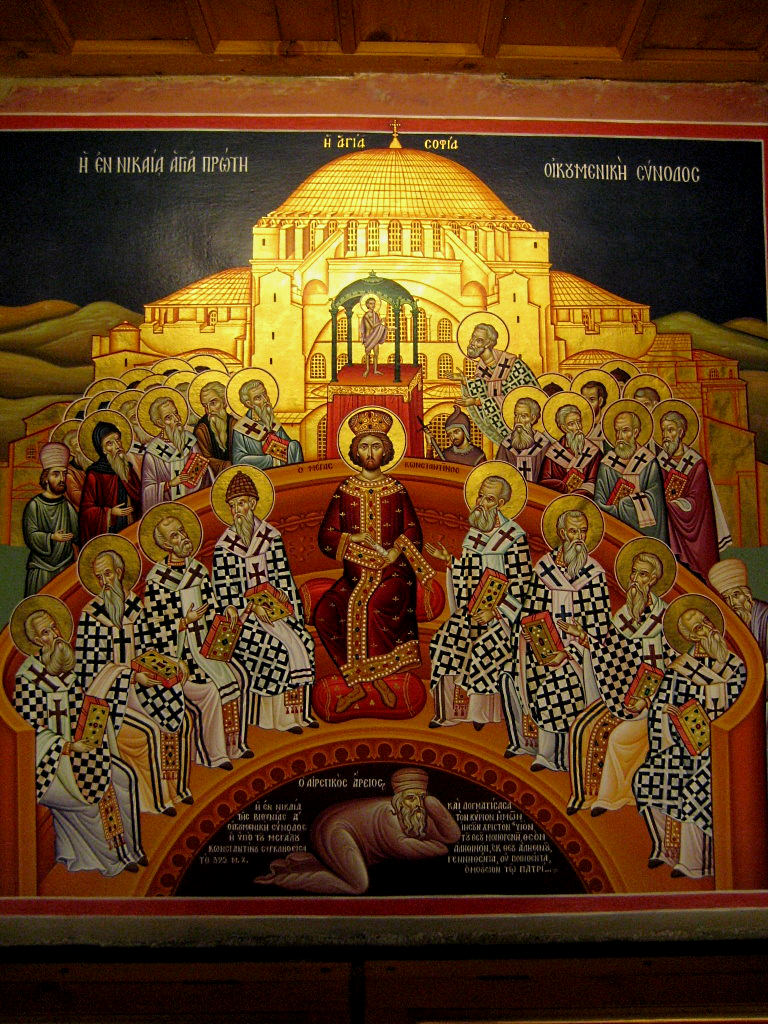
Icon showing the Council of Nicea condemning Arius
I think they have a really important place. But they aren't to be a replacement for the Bible and they shouldn't be given equal authority to the Bible. Rather, they are to be considered faithful expressions of the Bible.


We need faithful expressions of the Bible—both those written for our generation and those preserved from other generations.


I'm currently studying the battle surrounding the deity of Christ in the third and fourth century, which involved Athanasius and his heretical opponent Arias. What I'm learning is that the use of biblical language was a huge tactic for those who were departing from biblical truth!


That means that to say that you are a "Bible only" person might just mean that you're a heretic. In other words, you can use biblical texts to justify false things. [....]


A person who considers himself a "Bible only" person could believe anything. Therefore we need creeds (affirmations of faith) to see clearly how people are reading the Bible. Are they reading error into the Bible? Or are they drawing truth out of the Bible?


To suggest that we get rid of all creeds and just have the Bible is simply to allow people to think loosely about what the Bible says and not require that we come to terms with what it really means.
What more needs to be said? He's right: rejection of the Creeds is simply acceptance of heresy.  And yet... he rejects the very Creed he's previously endorsed, based on his misinterpretation of a single verse, Luke 23:43. He's shown, really eloquently, why his own views should be rejected.

But let's step back and ask the bigger questions.

St. Ignatius Defeating Heresy

  1. If Piper is free to do this, and remain an orthodox Christian, what parts of the Creed can't be rejected?  
  2. As he's noted, the Arians were able to use the Bible to justify their rejection of the Trinity.  If Piper's not bound by the Creed, why should Arius be?  Do we need some sort of Appendix to the Creed, to say which parts we're really serious about as Christians, and which parts we think are open for further debate?
  3. From a Protestant standpoint, do the Creeds have any binding authority whatsoever?  
  4. If they do, how can one justify rejecting Christ's descent into Hell?  Or, for that matter, belief in the Holy Catholic Church that the Apostles' Creed proclaims faith in?  
  5. And if the Creeds don't have any binding authority, but are just a statement of what one group of Christians happens to believe, why bother? Particularly if the people praying those Creeds omit or reject parts of the Creed they're praying, as Piper apparently does, what purpose do these spineless Creeds possible serve?

Increasingly, the choice is clear: either accept Creedal Christianity, which involves belief in One Holy Catholic and Apostolic Church (as the Nicene Creed declares), or reject it, and enter the world of theological anarchy and rampant heresy that Piper both warns against and invites us to.

This is Christianity.

0 comments
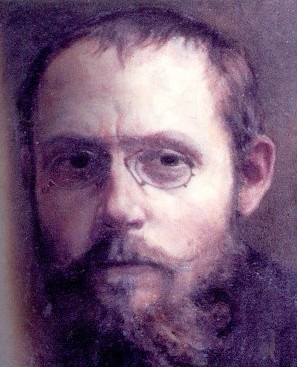
Charles Péguy
Why did He come? And why did the world come into being? One must believe that I have a certain importance, I who am nothing.... How is it possible that I am not great if I've messed up so many things in the world, disordered so many things in the world, and such a great world, at that? If I've started such a tragic history? A God, God went out of His way, God sacrificed Himself for me. This is Christianity.

Charles Péguy, Veronica
This was one of the Good Friday meditations for the Way of the Cross that Communion and Liberation led on the National Mall with Cardinal Wuerl this year.  I thought it did a great job of capturing the heart of Christianity, and is fitting during both Lent and Easter.

If We Can't Call Priests “Father,” It Doesn't Leave Much

0 comments
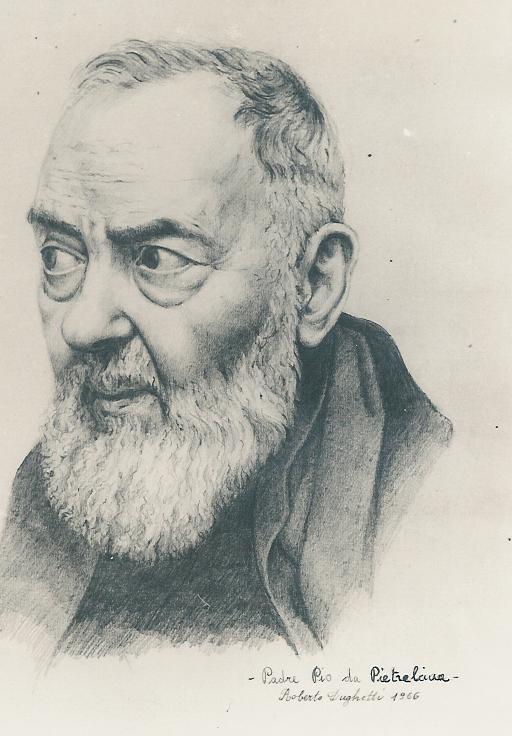
Padre Pio de Pietrelcina
Some time ago, I wrote a post on why we Catholics call our priests “Father.”  In a nutshell, this is a recognition of the priest's spiritual fatherhood. St. Paul sets the pattern for this in 1 Cor. 4:15, when he tells Timothy, “I became your father through the Gospel.”  The typical objection to this title is based on Jesus' words in Matthew 23:9 (“call no man your father upon the earth: for one is your Father, which is in heaven”). But these words aren't meant to be taken literally, as passages like Matthew 1:2, Mt. 10:37, Mark 10:29, Ephesians 6:2, James 2:21, and Romans 9:10 make clear.

Rather, Jesus is telling us in Matthew 23:9 to have no allegiances apart from Him.  So it's right to have St. Paul as a spiritual father (1 Cor. 4:15), but not in such a way that it turns into factionalism that damages or diminishes the Body of Christ (1 Cor. 1:12-13).

But let's say you disagree.

Let's say you think Matthew 23:9 has to be taken literally to forbid the use of “Father,” at least as a title or honorific.  What options does that leave you with, exactly?

Well, most Protestants use a title like “Reverend” or “Doctor,” or perhaps “Pastor” to refer to their spiritual leaders.  But “Reverend” comes from the word for “revered,” and literally means “One who is to be respected” or “One who is to be revered.”  Are Protestants comfortable embracing that?  After all, St. Peter tells us that “God is no respecter of persons” (Acts 10:34).  And, of course, the exact same Protestants who attack Catholics for using the title Father also attack Catholics for revering anyone other than God, saying things like “A definition of ‘venerate’ is ‘to regard with respect or reverence.’ Nowhere in the Bible are we told to revere anyone but God alone.”  So the folks who reject “Father” can't really substitute “Reverend” in its place.

What about “Pastor,” then?  Well, Christ says in the New Covenant, “there shall be one fold, and one shepherd” (John 10:16).  Taking this literally would seem to foreclose the use of “Pastor,” too.

The Reverend Doctor Martin Luther King, Jr.
“Doctor” fares the worst, since it comes from the Latin word for “teacher.”  That is, it falls under the exact same prohibition as “Father.” Here's what Jesus says in Matthew 23:8-9 (NIV),
But you are not to be called ‘Rabbi,’ for you have one Teacher, and you are all brothers. 9 And do not call anyone on earth ‘father,’ for you have one Father, and he is in heaven. 10 Nor are you to be called instructors, for you have one Instructor, the Messiah.
And the same passage in the KJV:
8But be not ye called Rabbi: for one is your Master, even Christ; and all ye are brethren. 9And call no man your father upon the earth: for one is your Father, which is in heaven. 10Neither be ye called masters: for one is your Master, even Christ.
And as John 20:16 explains, “Rabbi” means “Teacher.” So, then, someone claiming that we have to take the middle part of this passage as a literal ban on the title “Father,” can't replace it with a title meaning “Teacher” without engaging in some pretty brazen hypocrisy.  So “Doctor” is out, as well.

Well, perhaps we could just get rid of the special title, and go with a simple “Mister,” instead?  Nope.  Mister is a variation on the title “Master”, which Christ condemns in this very same passage.

Conclusion

Mister Rogers (Fred Rogers)
My point here is simple.  If we're going to insist on using passages like Matthew 23:8-10 in a literal and legalistic way, it's going to make it very awkward to communicate.  Can you call your dad “father”?  What about Abraham?  Can you call your surgeon “doctor”?  Or what about the practice of kids calling their teachers “teacher”?  Is saying, “Mr. Rogers' Neighborhood” a violation of Matthew 23?

You get my point.

Thankfully, the New Testament shows no signs of this legalistic neurosis.   Abraham is described throughout the New Testament as “Father Abraham” (Luke 16:24; Luke 16:30), “our father in the sight of God” (Rom. 4:17),  and “Abraham our father” (James 2:21).  Both St. Paul (Romans 4:11-18) and Jesus Christ (John 8:39) make clear that this title is due to Abraham being our father in faith, rather than a biological ancestor.  That is, the New Testament does exactly what modern Catholics do: refers to spiritual leaders as “fathers.”  That's because we believe that all fatherhood comes from God (Ephesians 3:15).  So every father, spiritual or biological, shares in some sense in God's singular Fatherhood.  Thus, Matthew 23 is violated only if you set up a rival fatherhood or a rival authority to God's.

Christ isn't calling us to some letter of the law obedience to use and not use certain words. He's reminding us that in the end, there's only one true Father, Pastor, Teacher, Master, Lord.  The clergy are called to cooperate in God's leadership, not compete against it.  Following a rival father, pastor, teacher, master, or lord is what's forbidden.  That's what Matthew 23:8-10 is about.  On the other hand, Christ says to those He commissions: “he that hears you, hears Me.” (Lk 10:16).  So the authentic clergy of Christ are not a threat to God, since they're the ways He makes His Fatherhood visible in the world.  And it's right that we should follow the New Testament practice of calling such men “Father,” as a result.

CNN's Easter-Bashing Goes Laughably Awry

0 comments
CNN's annual “Bash Christianity on Easter” story is crazier than usual.

 This year, they ran an article entitled The Jesus Debate: Man vs. Myth. On one side were John Dominic Crossan and Bart Ehrman, who deny the physical Resurrection. On the other side, are folks like (self-proclaimed “spiritual pioneer”) Timothy Freke who go even further, and deny that Jesus even existed.  They don't just deny Easter, they deny Christmas.

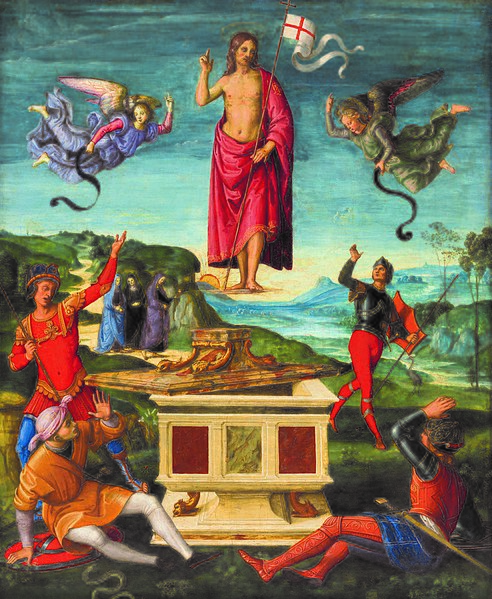
Raphael, The Resurrection of Christ (1502)
That's right: the Resurrection-denying side was the closest thing to orthodoxy in this debate, at least for the first forty paragraphs (literally).  Around the forty-seventh paragraph, they finally quote Prof. Craig A. Evans, who explains that Jesus of Nazareth existed.  He is literally the first and only Christian source quoted.  And the only thing they use Evans for is to provide some quotes saying that Jesus exists -- you wouldn't be able to tell from the context whether or not Evans even believes in the Resurrection.

So CNN's idea of a balanced article commemorating Easter is to depict the debate as between those who deny the Resurrection and those who deny the entirety of the Gospels.  It's hard to know what to describe this as, if not flagrant bias, particularly when it's coupled by this sort of editorializing:
Those who argue against the existence of Jesus say they aren’t trying to destroy people’s faith.

“I don’t have any desire to upset people,” says Freke. “I do have a passion for the truth. … I don’t think rational people in the 20th century can go down a road just on blind faith.”

Yet Easter was never just about rationale.

The Easter stories about the resurrection are strange
: Disciples don’t recognize Jesus as they meet him on the road; he tells someone not to touch him; he eats fish in another.
Those last two paragraphs are apparently from the reporter (CNN writer John Blake) himself, explaining that since we believers don't really care about things like reason, we can still cling to our faith.

I. What Does the Scholarship Actually Say?

Lorenzo Costa, The Holy Family (1490)
I could sort of understand this false balance if the scholarly debate really was split between those two Easter-denying camps.  But that's not the case at all.  Professor Evans describes the state of academia in his book, Fabricating Jesus: How Modern Scholars Distort the Gospels (p. 220):
Not long ago Tom Harpur's The Pagan Christ created a sensation by presenting in new form the odd notion that Jesus did not exist. I say odd because almost no serious academic - of any ideological, religious or nonreligious stripe - doubts that Jesus of Nazareth actually lived some time in the first century and was crucified by order of Pontious Pilate, governor of Judea.  The evidence for the existence of Jesus - literary, archaeological and circumstantial - is overwhelming.
The agnostic Bart Ehrman is even more blunt.  CNN reports his reaction this way:
Most Jesus deniers are Internet kooks, says Bart D. Ehrman, a New Testament scholar who recently released a book devoted to the question called “Did Jesus Exist? The Historical Argument for Jesus of Nazareth.”
That is, almost every scholar acknowledges that Jesus existed, and the debate is over whether or not He rose from the dead.  But CNN wants to recast it so that every scholar accepts that Jesus didn't rise from the dead, and the debate is over whether or not He even existed.

They go digging through the dregs pretty far to find someone who will say this, too.  In a  follow-up post, they described the article as a “story on a small cadre of authors challenging the existence of Jesus Christ.”  So CNN sought out, not “scholars,” not “experts,” but “a small cadre” of authors,” just to find somebody who would deny that Jesus existed.

II. Does an Ancient Amulet Disprove Christianity?


Don't get me wrong: plenty of folks outside of academia have had invaluable insights into the Gospels.  But shouldn't we expect to find some sort of expertise from the folks that CNN dug up?

Instead, we get another regurgitation of the long-discredited idea that the Gospels are just a retelling of pagan myths.  No one who has actually read the Gospels and the pagan myths in question could seriously claim this, and I've previously criticized the sloppy methodology behind these claims, showing that they could just as easily “prove” that Gandhi didn't exist.

But let's look at the specific “evidence” that gets trotted out for the CNN piece.  The article opens by talking about how Freke decided Jesus didn't exist after reading an old book with a picture of “a drawing of a third-century amulet” of “Osiris-Dionysus, a pagan god in ancient Mediterranean culture” on a cross in a very Christological manner.

The drawing that allegedly
disproves Christianity.
It's hard to know where to begin.  First of all, the drawing in question (depicted on the left) doesn't claim to be of “Osiris-Dionysus” but of “Orpheus” and Dionysus (also known as Bacchus).  This mistake is embarrassing, since the drawing has ΟΡΦΕΟΣ ΒΑΚΚΙΚΟΣ (Orpheus Bacchus) written on it.

And “Osiris-Dionysus” wasn't “a pagan god in ancient Mediterranean culture.”  These were two separate gods from different cultures. Osiris was the Egyptian god of the dead, and Dionysus was the Greek god of wine. And Orpheus wasn't another name for Osiris or Dionysus, or any other god, for that matter.  Rather, it's the name of a mythical Greek prophet and storyteller.  In Greek mythology, Orpheus was killed by Dionysus.  So the idea that Osiris, Orpheus, and Dionysus are all one god is off to a ... rocky start, to say the least.

There's also the fact that the now-lost amulet was almost certainly a forgery. The German epigrapher Otto Kern, who initially promoted the amulet as authentic, recanted in the face of the evidence, a fact that Freke's coauthor Peter Gandy has acknowledged.  In Kern's words, the amulet “is almost certainly a fake.”  For example, the bent knees in the depiction of the Crucifixion is characteristic of later Medieval art, not art from late antiquity.  But since the only evidence of the amulet's existence is the line drawing, it's impossible to know for sure.

So let's overlook all of that for a moment.  Assume that the amulet was authentic, and that it actually did depict Dionysus (or Osiris, or Orpheus, or “Osiris-Dionysus”) in a very Christ-like pose.  What does this prove, exactly?  By Kerns' own telling, the amulet is supposed to be from the third century A.D.

Did time-travelling Christians steal this image to construct the story of Jesus?  Because the Crucifixion of Christ was a pretty central part of Christianity from the first century. You might as well point to Kanye West's obnoxious Rolling Stone cover as proof that the Gospels were based off of rap music.

Theophanes the Cretan,
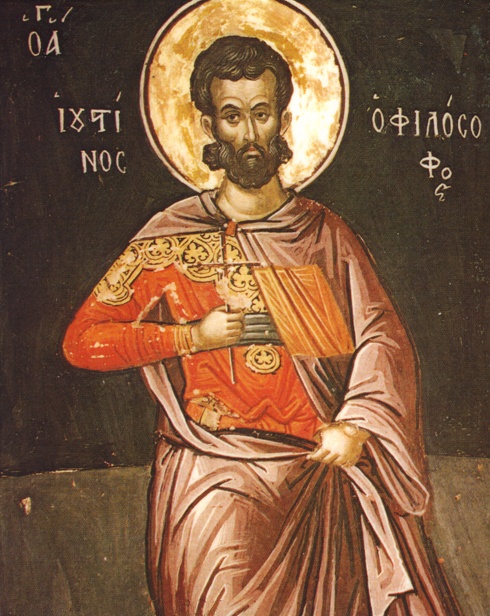
Justin the Philosopher (1546)
Perhaps a more lucid conclusion from those facts would be that later Christological depictions of Messianic pretenders (from pagan gods to Kanye West) are modeled off of a very Christian understanding of what a Messiah looks like.  That is, even a pagan living in the Christianized West hears “Messiah” and thinks of Jesus, and it's natural that art should reflect this.

In fact, we know from St. Justin Martyr's writings (c. 180 A.D.) that the pagans didn't have crucified depictions of their gods:
But in no instance, not even in any of those called sons of Jupiter, did they imitate the being crucified; for it was not understood by them, all the things said of it having been put symbolically.
And he says this exactly one chapter after he lists Bacchus as one of the sons of Jupiter.  So the idea that Bacchus was depicted as crucified, prior to Christ, is directly contradicted by the only evidence that we have.

Let me emphasize something here: this amulet is at the heart of Freke's argument.  I didn't just choose Freke's stupidest argument.  Rather, this is how the CNN article opens, and Freke and Gandy acutally put a computer enhanced (read: “doctored”) version of the amulet drawing as the cover of their own book.

Given all of this, Freke's amulet argument is laughably weak.  It's probably fake, and even if it were real, it doesn't remotely prove what Freke and the others are claiming (and goes directly against uncontroverted second-century evidence).
Conclusion

As is hopefully clear, this was worse than a puff piece.  This was part of a recurring trend: that each year at Easter, CNN runs stories hostile to orthodox Christianity, and often doesn't bother checking even basic facts.

I don't think it's an exaggeration to say that CNN's article would be roughly equivalent to a mainstream news source deciding on the anniversary of V-E Day to run an article sympathetic to Holocaust deniers.  In both cases, we're dealing with conspiratorial nuts without regard for evidence.  And in both cases, it would be incredibly tactless for a paper to run that sort of frontal assault at that particular time.  But as BBC director-general Mark Thompson has admitted (and defended), it's common practice to treat Christianity much more harshly than religions like Judaism or Islam.

I'm not suggesting that Christianity (or any religion) be treated with kid gloves.  As Christians, we make truth claims, and I would love a spirited dialogue over the reliability of those claims.  But this trend of exploiting Christian religious holidays to spread bilious nonsense under the guise of critical scholarship is the opposite of the role that the media should be playing.

Holy Saturday

0 comments
For Christ also died for sins once for all,
the righteous for the unrighteous, 
that he might bring us to God,
being put to death in the flesh but made alive in the spirit;

in which he went and preached to the spirits in prison,
who formerly did not obey,
when God's patience waited in the days of Noah,
during the building of the ark,
in which a few, that is, eight persons,
were saved through water.

1 Peter 3:18-20

Duccio di Buoninsegna, Descent to Hell (1308)

Come, let us return to the LORD;
   for he has torn, that he may heal us;
   he has stricken, and he will bind us up.

After two days he will revive us;
   on the third day he will raise us up,
   that we may live before him.

Let us know, let us press on to know the LORD;
   his going forth is sure as the dawn;
   he will come to us as the showers,
   as the spring rains that water the earth.
Hosea 6:1-3

Good Friday

0 comments
Behold, my servant shall prosper, he shall be exalted and lifted up, and shall be very high. As many were astonished at him -- his appearance was so marred, beyond human semblance, and his form beyond that of the sons of men -- so shall he startle many nations; kings shall shut their mouths because of him; for that which has not been told them they shall see, and that which they have not heard they shall understand.

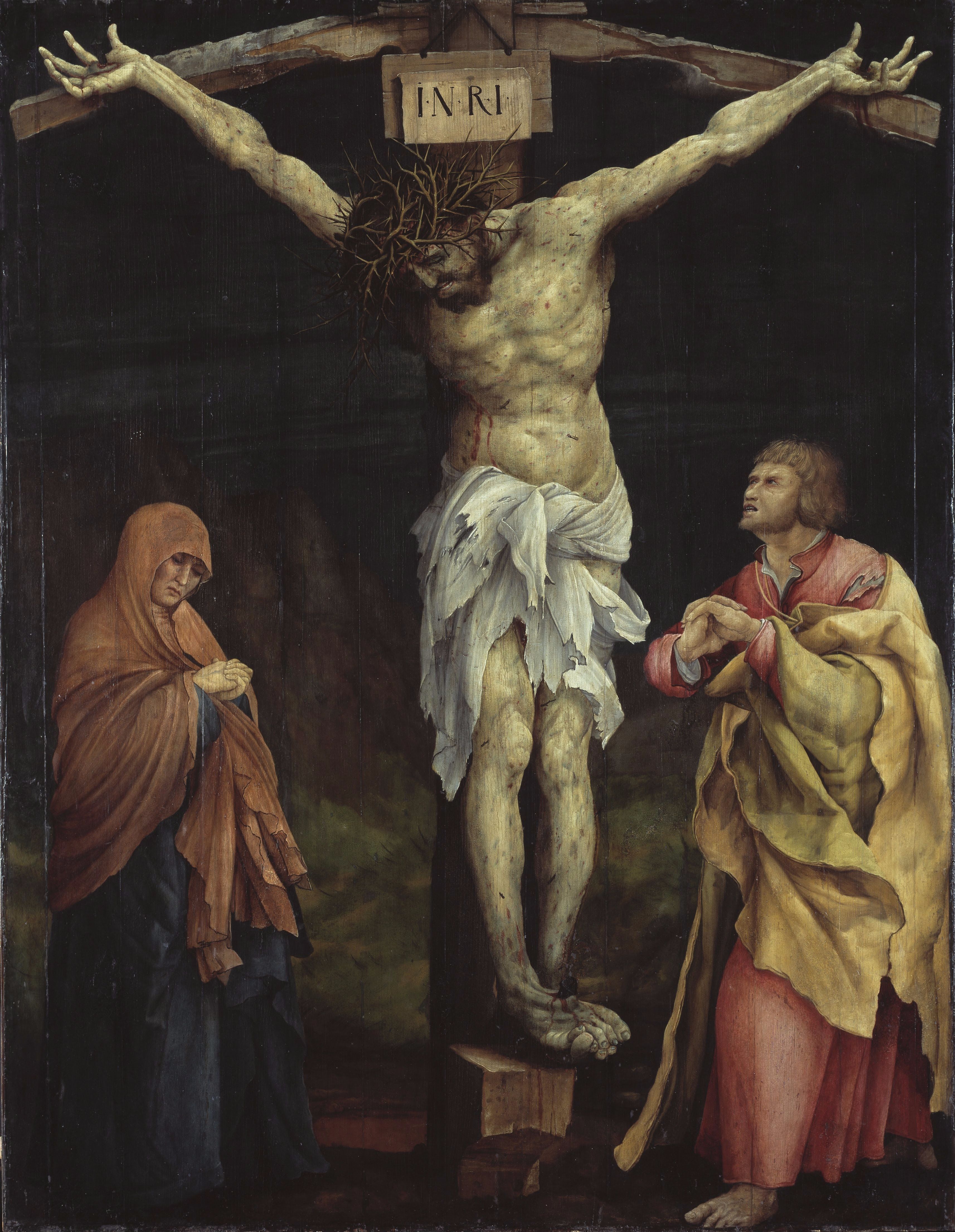
Matthias Grünewald, The Crucifixion of Christ (1524)
Who has believed what we have heard? And to whom has the arm of the LORD been revealed? For he grew up before him like a young plant, and like a root out of dry ground; he had no form or comeliness that we should look at him, and no beauty that we should desire him. He was despised and rejected by men; a man of sorrows, and acquainted with grief; and as one from whom men hide their faces he was despised, and we esteemed him not.

Surely he has borne our griefs and carried our sorrows; yet we esteemed him stricken, smitten by God, and afflicted. But he was wounded for our transgressions, he was bruised for our iniquities; upon him was the chastisement that made us whole, and with his stripes we are healed.

All we like sheep have gone astray; we have turned every one to his own way; and the LORD has laid on him the iniquity of us all. He was oppressed, and he was afflicted, yet he opened not his mouth; like a lamb that is led to the slaughter, and like a sheep that before its shearers is dumb, so he opened not his mouth.

By oppression and judgment he was taken away; and as for his generation, who considered that he was cut off out of the land of the living, stricken for the transgression of my people?And they made his grave with the wicked and with a rich man in his death, although he had done no violence, and there was no deceit in his mouth.

Yet it was the will of the LORD to bruise him; he has put him to grief; when he makes himself an offering for sin, he shall see his offspring, he shall prolong his days; the will of the LORD shall prosper in his hand; he shall see the fruit of the travail of his soul and be satisfied; by his knowledge shall the righteous one, my servant, make many to be accounted righteous; and he shall bear their iniquities.

Therefore I will divide him a portion with the great, and he shall divide the spoil with the strong; because he poured out his soul to death, and was numbered with the transgressors; yet he bore the sin of many, and made intercession for the transgressors.
Isaiah 52:13-53:12

Andrea Mantegna, Altar of San Veno in Verona, Crucifixion triptych (1459)


"Let us lie in wait for the righteous man, because he is inconvenient to us and opposes our actions; he reproaches us for sins against the law, and accuses us of sins against our training. He professes to have knowledge of God, and calls himself a child of the Lord.

Pietro Lorenzetti, Shaped Cross (1325)
He became to us a reproof of our thoughts; the very sight of him is a burden to us, because his manner of life is unlike that of others, and his ways are strange. We are considered by him as something base, and he avoids our ways as unclean; he calls the last end of the righteous happy, and boasts that God is his father.

Let us see if his words are true, and let us test what will happen at the end of his life; for if the righteous man is God's son, he will help him, and will deliver him from the hand of his adversaries.

Let us test him with insult and torture, that we may find out how gentle he is, and make trial of his forbearance. Let us condemn him to a shameful death, for, according to what he says, he will be protected."

Thus they reasoned, but they were led astray, for their wickedness blinded them, and they did not know the secret purposes of God, nor hope for the wages of holiness, nor discern the prize for blameless souls; for God created man for incorruption, and made him in the image of his own eternity, but through the devil's envy death entered the world, and those who belong to his party experience it.
Wisdom 2:12-24